
Citizens sleeping while Earth rots

Staff Reports / The New York Times

It’s hard to know how many of us citizens are monitoring the mess oozing from the ground in Ohio, where toxic waste water from fracking is bubbling out of the soil in dozens of places and is all but certain to show up one day in the drinking water of historic Marietta, Ohio, and other communities.

The radioactive mess should surprise no one. Ohio state officials have in the past few years approved more than 240 “injection wells” for the disposal of the waste oil and gas that are byproducts of fracking to mine the earth for natural gas.

By comparison, there are just 19 such injection wells in Pennsylvania, and a few dozen in West Virginia, both of which border Ohio.

State officials, like officials everywhere else, assured citizens the injection wells would safely entomb the water for ever.

That was, of course, a lie.

Beyond the toxic leaks oozing in yards, state forest, and farm fields are hundreds of millions of gallons of radioactive fracking wastewater buried with the state’s blessings beneath the feet of Ohioans.
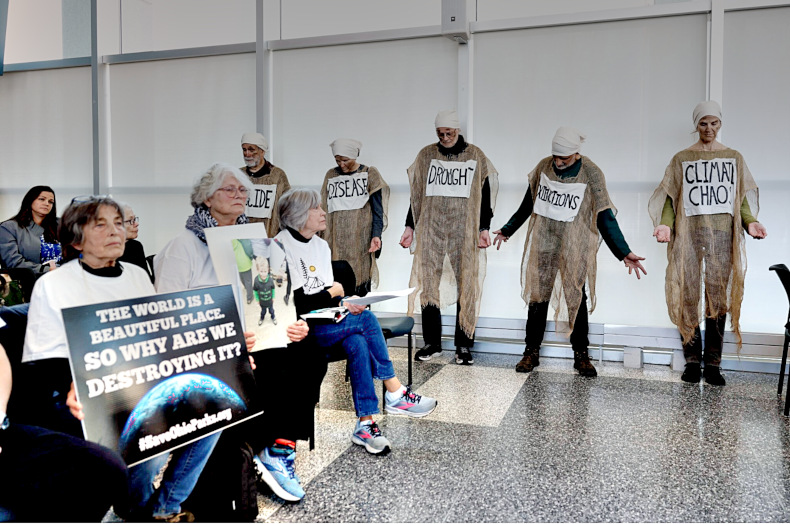
Ohio fracking protest
COLUMBUS, OH — FEBRUARY 26: Protesters from Save Ohio Parks during the Ohio Oil and Gas Land Management Commission meeting to pick the winning bids for drilling under a state park and two wildlife areas, February 26, 2024, at the Ohio Dept. of Public Safety, Charles D. Shipley Building Atrium in Columbus, Ohio.

For years, it has arrived in a caravan of tanker trucks that come night and day to deposit the toxic brine in injection wells that pump it thousands of feet underground, where it is supposed to stay forever.

Except, oops. The poison brine is spurting to the surface, and locals fear it could soon contaminate the drinking water source for 32,000 people. “It would destroy the city,” said Susan Vessels, president of the Marietta City Council. “Once the damage is done, it cannot be undone.”

Vessels claims — though I’m absolutely not convinced — that residents and local officials were for years “completely unaware” of their place at the heart of an interstate marketplace for toxic waste. They’ve come to realize, she said, that their corner of Ohio has become a major destination for fracking brine.

What Vessels should have said is that she and others around Marietta were willingly blind to the destruction of Mother Earth. The photo of protestors at an Ohio fracking meeting comes from a February 2024 article, and there are news reports earlier than that.

This ecological nightmare didn’t come out of no where. It came with the approval of state and the silence of far too man local officials and citizens.

Read the original news report at The New York Times
It Should be a National Holiday

The domesticated tomato may date back 7,000 or more years, but the 2026 edible variety didn’t show up in Murphy, North Carolina, until July 23 at our local farmers market. At least this was the first I had seen this season.

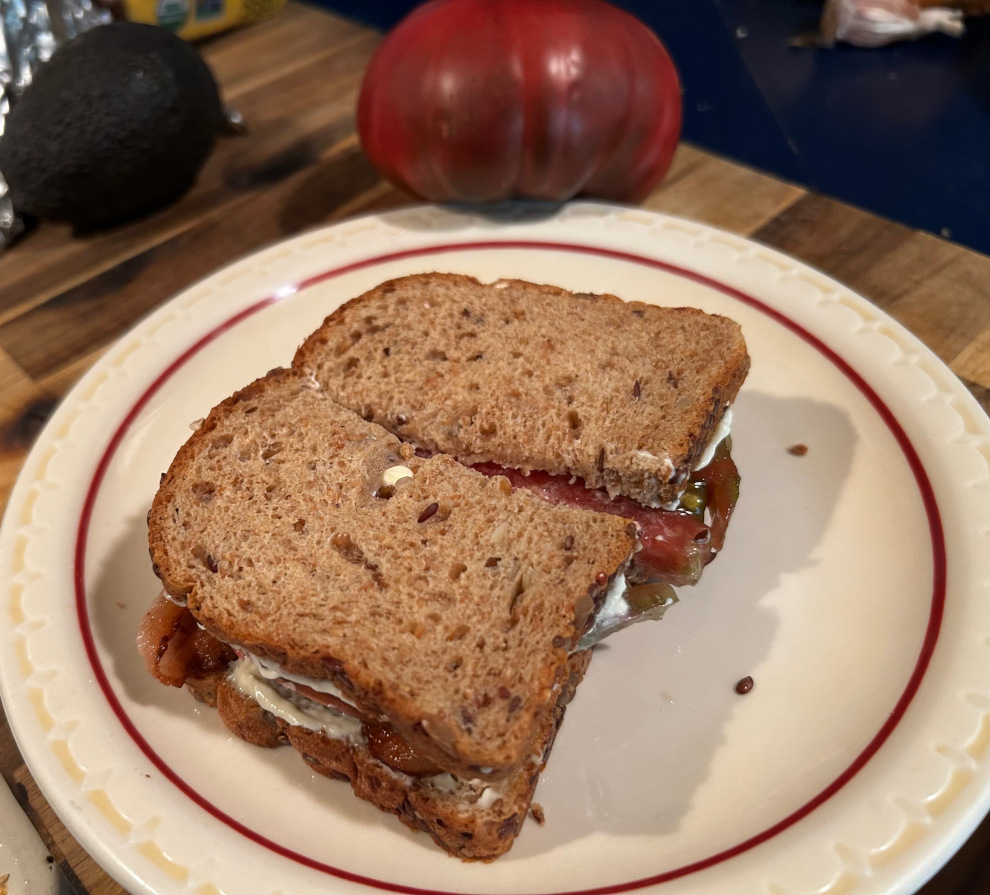
So, naturally I’ve been eating a summer’s worth of tomato sandwiches since. And every one has been worth its weight in gold.

For those who want to know, the wild ancestor of the tomato, the red-fruited Solanum pimpinellifolium, is native to Chile, Peru, and Ecuador. The exact date of domestication is unknown, but as I said earlier, about 5,000 years before the Modern Era — some 7,000 years ago.

But it’s darn odd to me that the tomato is that old and yet mankind endured another 6,900 years or so before the first mention of the tomato sandwich. That didn’t happen until 1911 when The Virginia Chronicle newspaper published the first reference to a workingman’s tomato sandwich — which the idiot paired with watermelon, according to the newspaper anyway.

Watermelon with tomato! The indignity!

The tomato itself goes with lots of things, it’s true, but I doubt any southerner has wanted to pair it with melon. Go figure.

Anyhow, for a sandwich, the only absolute requirements are good bread, Duke’s Mayonnaise, and bacon. Lettuce may not be essential, but it’s a wonderful addition to the tomato sandwich. But with the current scare over the nasty stomach ailment known as cyclosporiasis I’ve been avoiding that leafy green addition for the time being.

So salute the wonderful tomato — not the supermarket variety, which you can buy year round though rarely if ever enjoyably. Supermarket tomatoes are legendary in their tastelessness.

Murphy, my adopted hometown, is doing its best to plug the gaps in tomato appreciation and history. This coming Saturday, August. 1, the Cherokee Clay Food Alliance in conjunction with the Murphy Farmers Market bring us the 3rd annual Tomato Fest on the farm market grounds at the old train depot.

And it’s peak season for the truly edible variety. I plan to make the festival to restock my tomato supply. I hope you can.


Piedmont Blues duo

Valerie Turner lays lead guitar, handles lead vocals, and specializes in intricate Piedmont-style ragtime fingerpicking, while her husband and bandmate Benedict (Ben) Turner provides traditional roots percussion using the washboard, bones, harmonica, and harmony vocals. The two serve as cultural historians and educators preserving early African-American country blues.