"The hour of the American barbarian is at hand. Violence, excess, waste, mercantilism, bluff, conformism, stupidity, vulgarity, disorder." — Aimé Césaire
Spiders are among the best evidence we have that there are no gods as we have known them throughout our struggle over tens of thousands of years to explain our world.
We lack the imagination to do it right, creating as we do gods that are like ourselves, but with superpowers — Anu, Marduk, Ra, Isis, Zeus, Huitzilopochtil, Athena, Apollo, Aphrodite, Jupiter, Onin, Loki, Brahma, Vishnu, Itzamna, Thor, The Great Spirit, Shiva . . . and on and on and on.
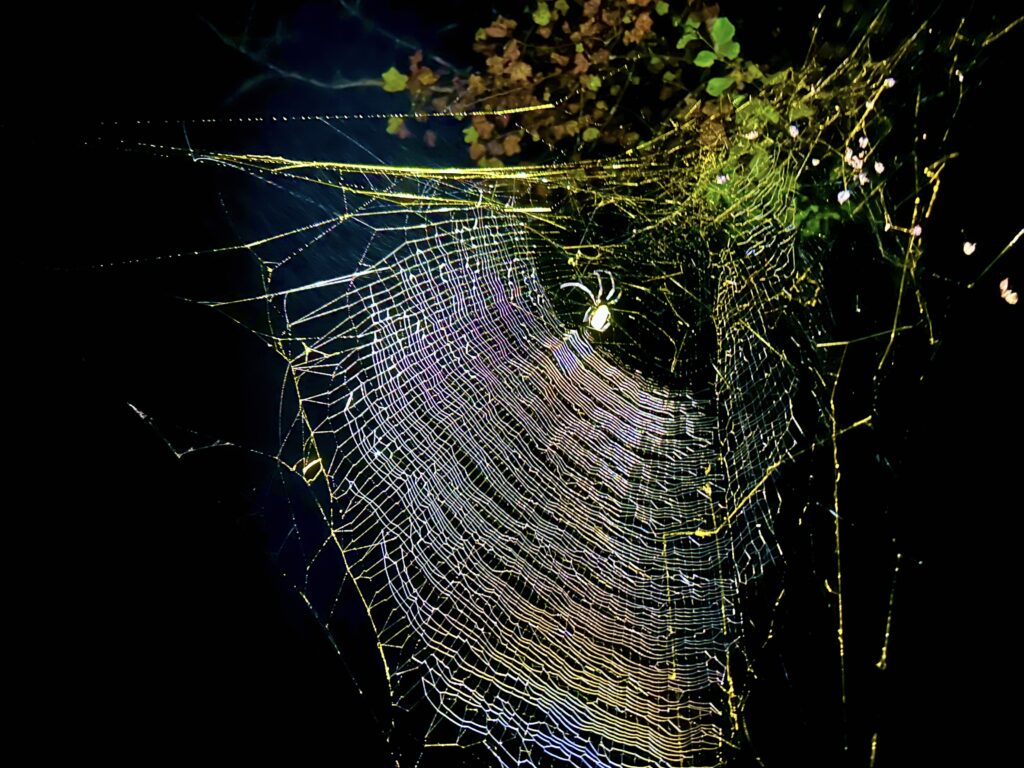
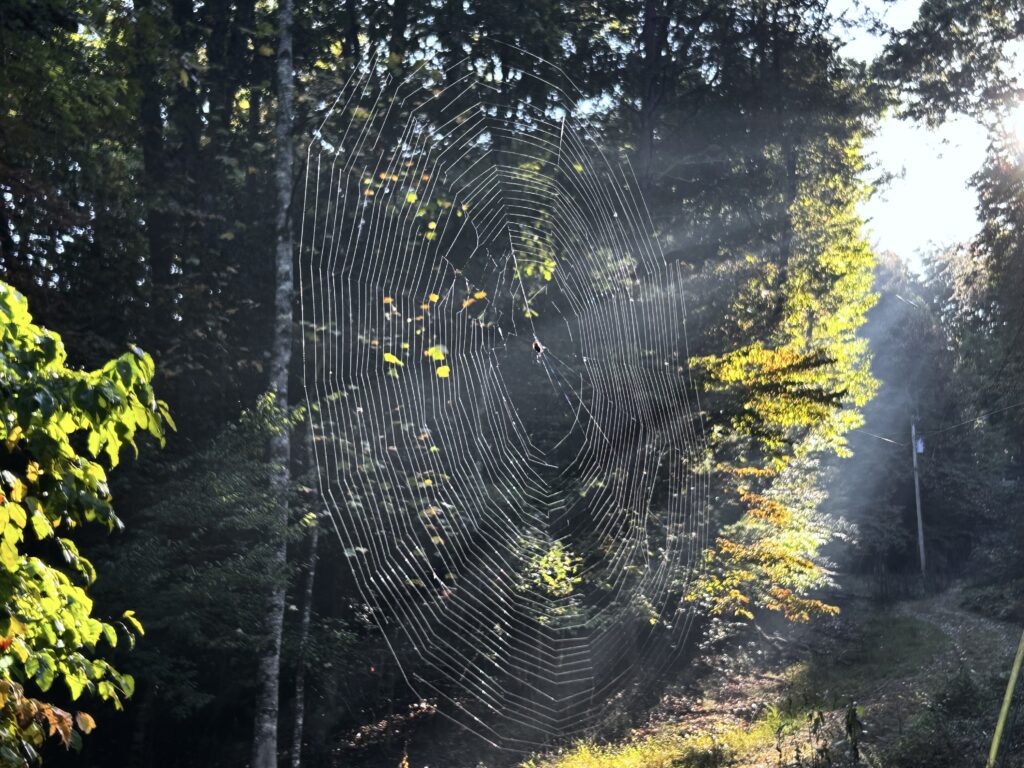
Spider web at night
Never getting it right.
Spiders, meanwhile, pull a liquid protein from their bellies that crystallizes upon contact with the air and becomes a fiber far stronger than steel. In an hour or so they weave a geometrically astonishing home that is an extension of their brain.
Night is often the best time to view that marvel of nature we know as the spider web, and a working flashlight is the only tool you’ll need for the task.
That and a camera. You’re gonna want to take photos.
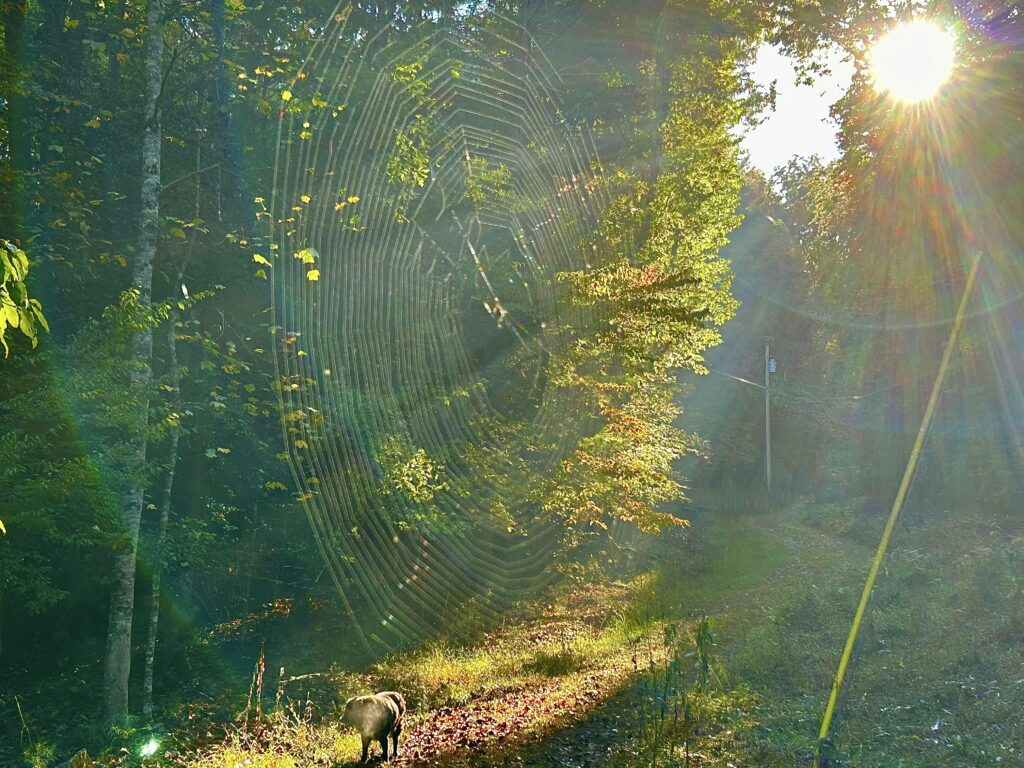
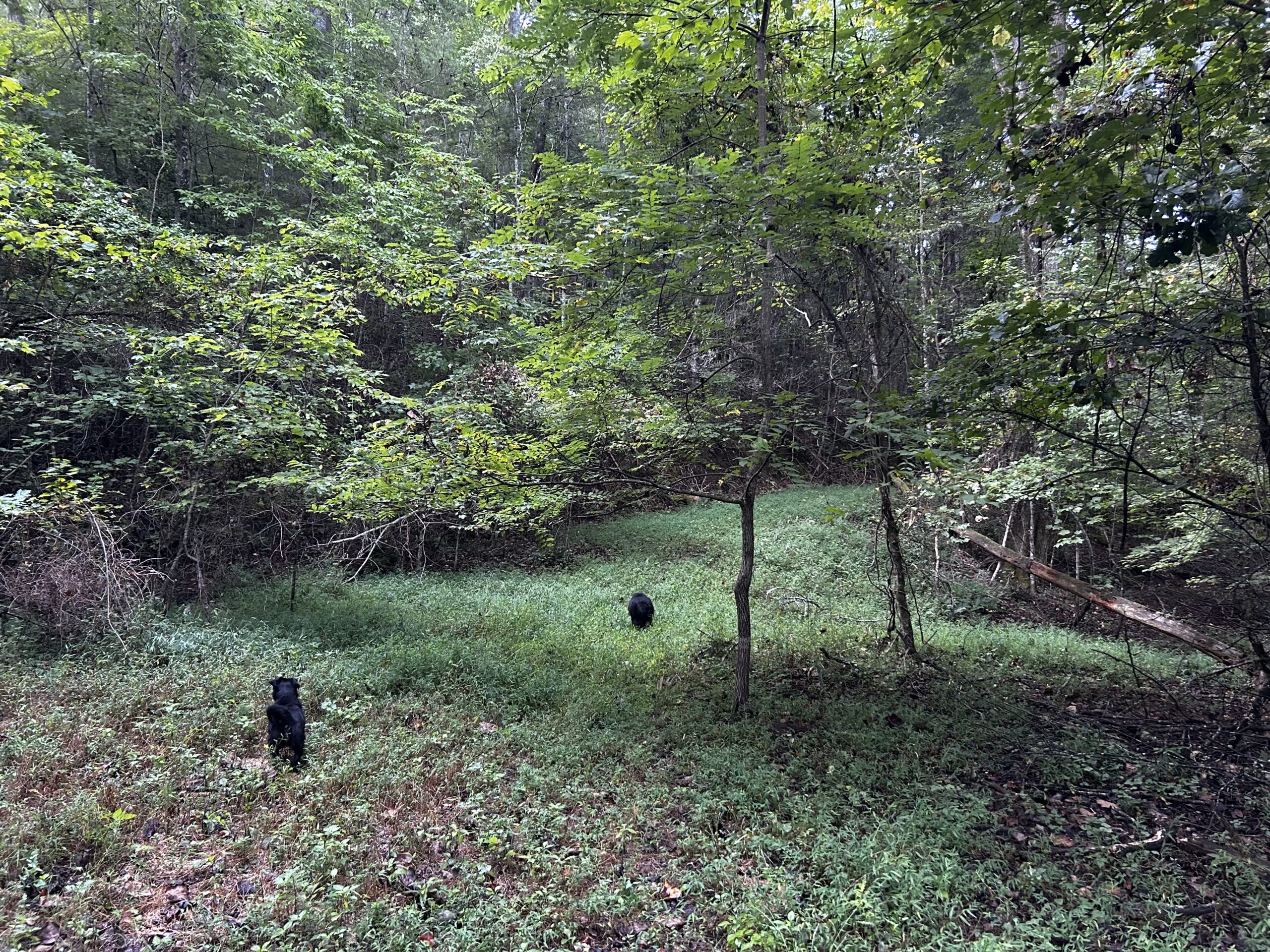
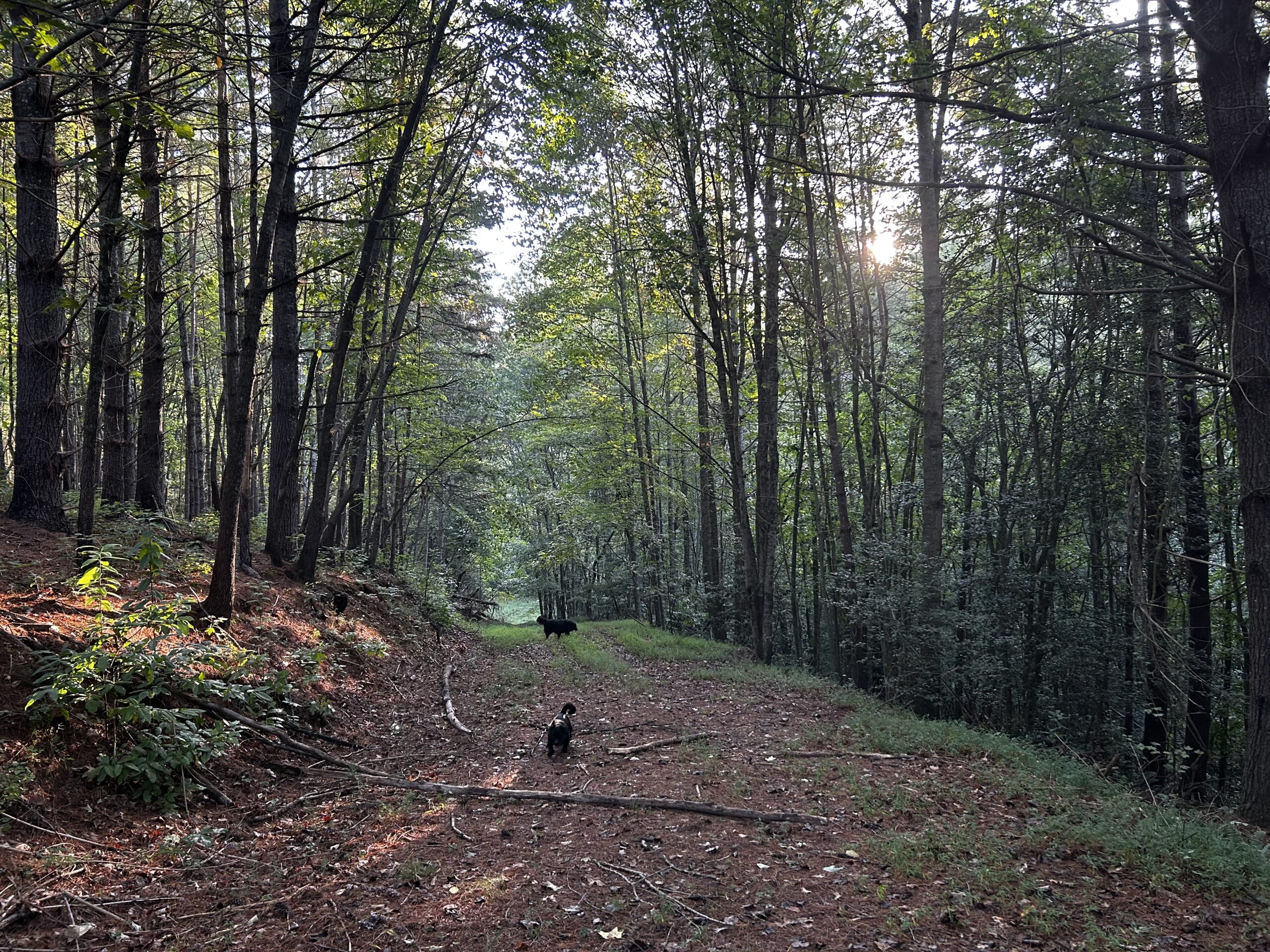
The fire-service roads lead deep into the Nantahala National Forest northwest of Murphy, and this morning — with dew still on the grass and mist thick in the air — we followed one of those roads into the trees to a clearing where it eventually gave way to a game trail.
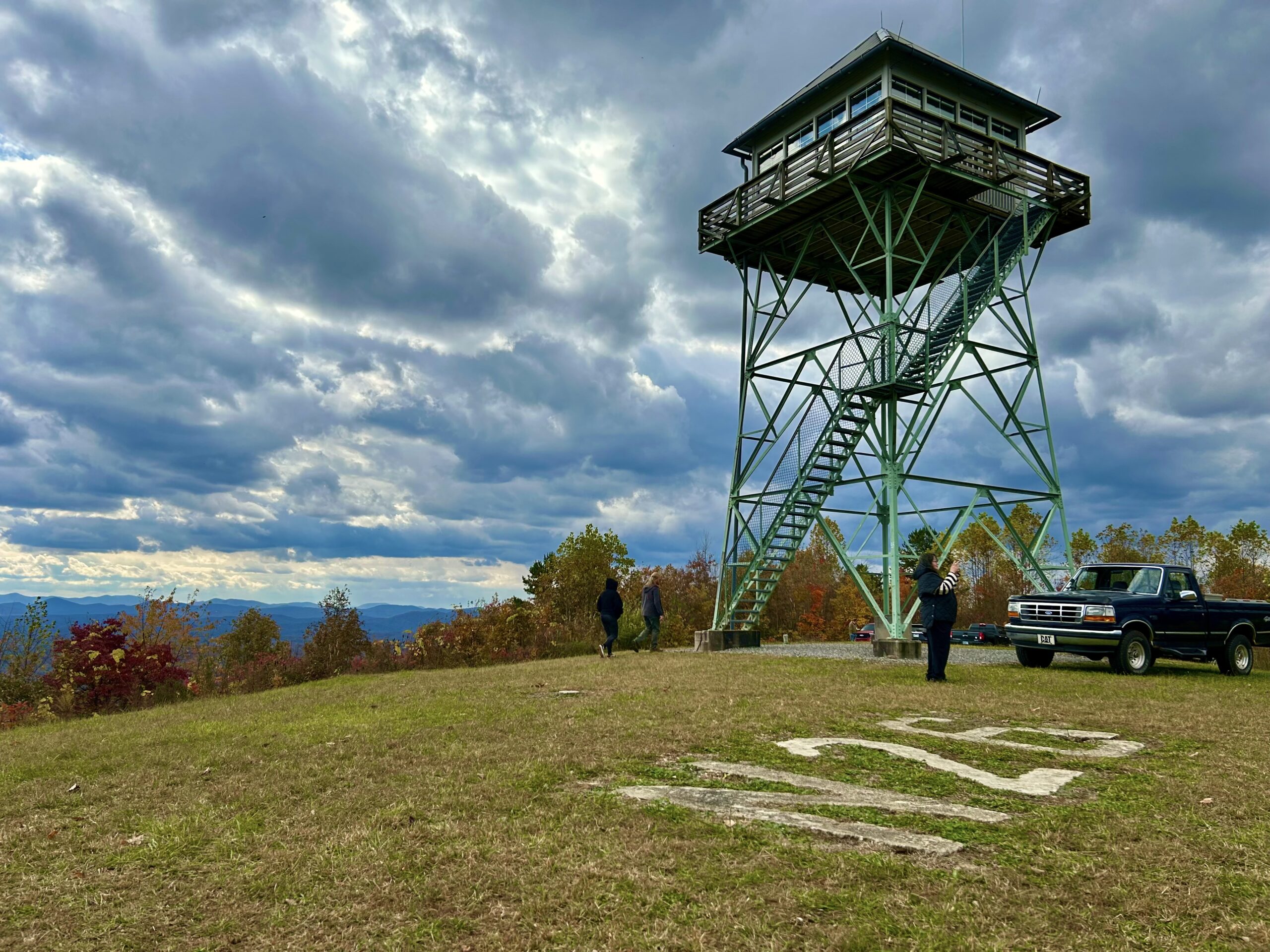
The Panther Top Fire Tower.
CLICK ON ANY OF THE IMAGES FOR AN EXPANDED VIEW
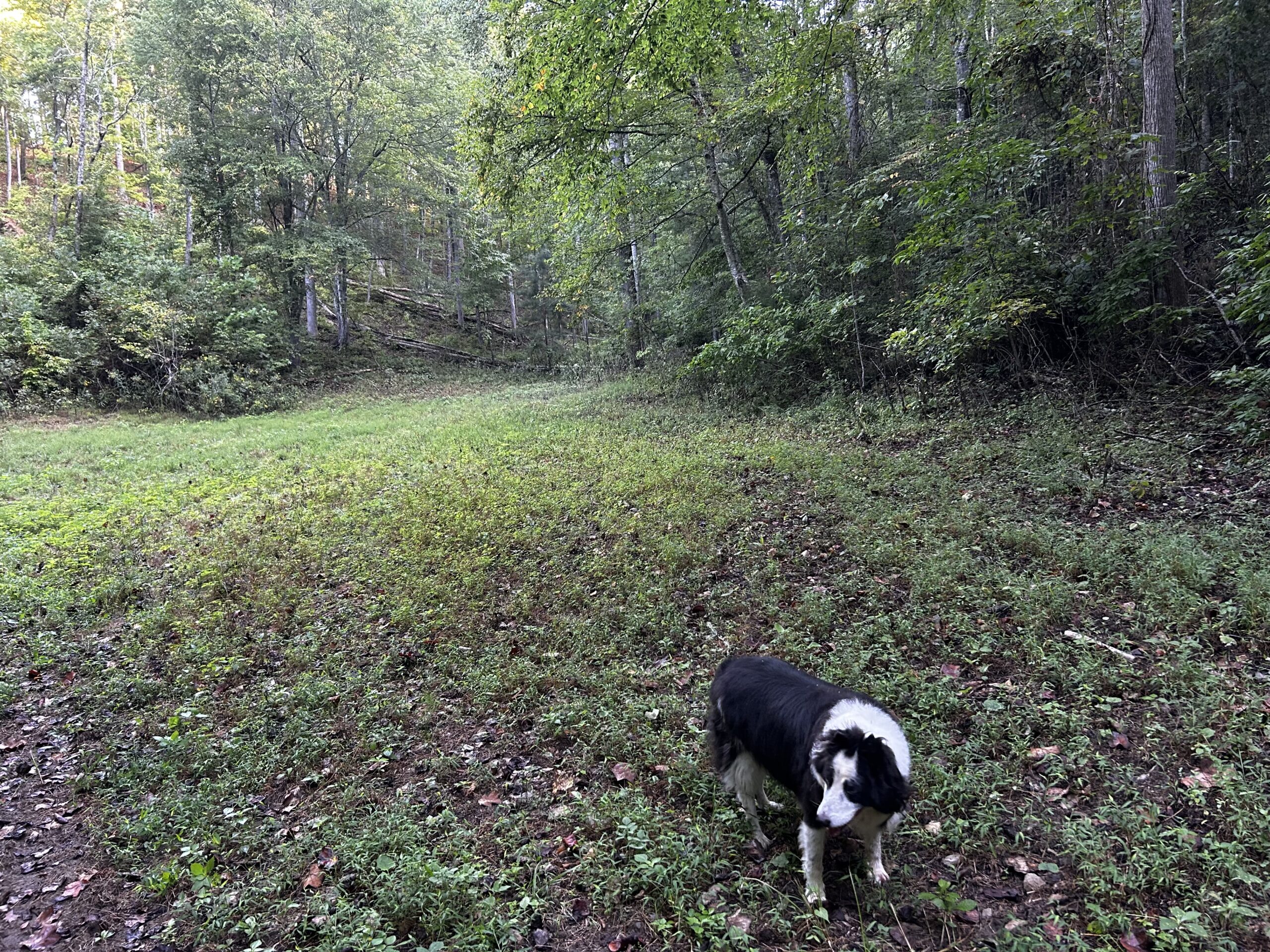
Phoebe was on point, as she often is, with short-legged Hazel just behind, then me, then Poe ringing up the rear as he always does.
Apart from the occasional bird call, the woods were quiet.
The closest human was probably at least three miles away, maybe at the Panther Top Fire Tower — a popular local sight-seeing spot that provides some great views of the surrounding mountains. But I doubted it. That’s mostly an afternoon undertaking, and it was not yet quite 8 a.m.
So I was pretty sure the pups and I had the woods to ourselves apart, of course, from the deer, black bear, possum, raccoon, squirrel, bob cat, and all the other critters that make their homes here.
With September more than half over, there was a carpet of leaves covering much of the forest floor, but the dampness still made for relatively quiet walking. Even so, the four of us made a fair amount of noise that would have alerted any forest dwellers to scoot to deeper cover long before we actually arrived on the scene.
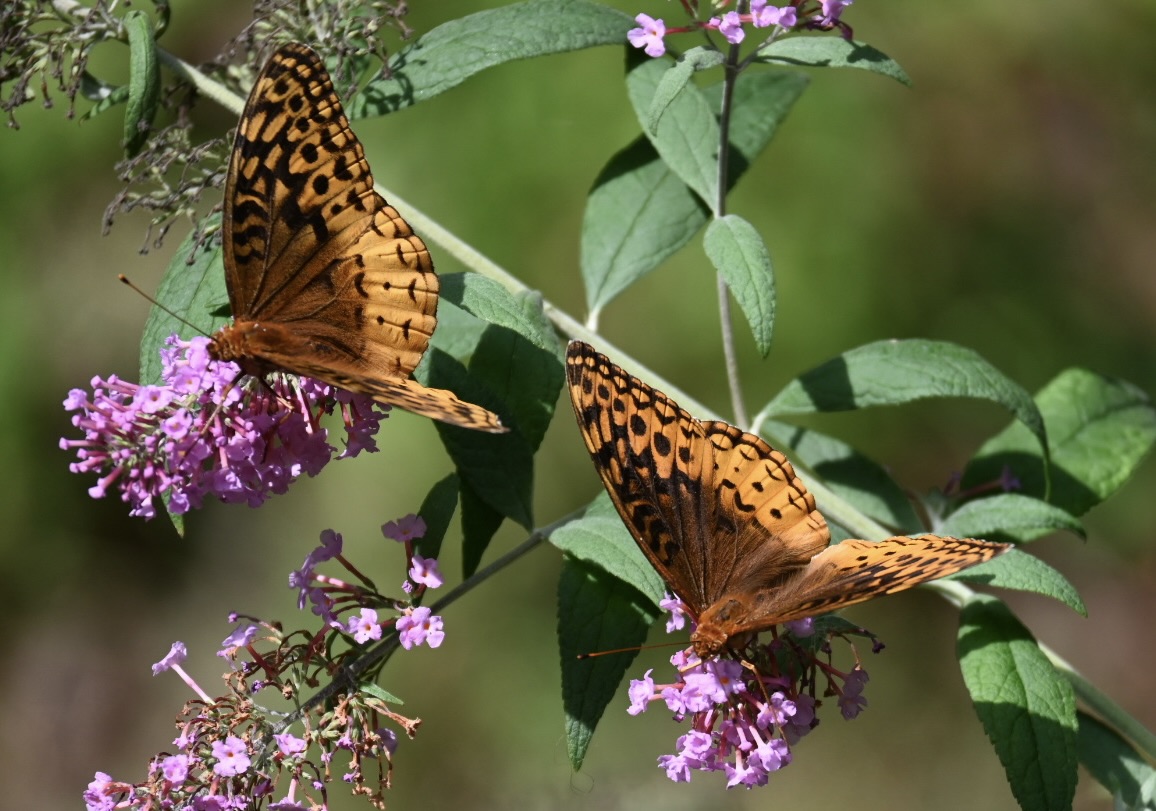
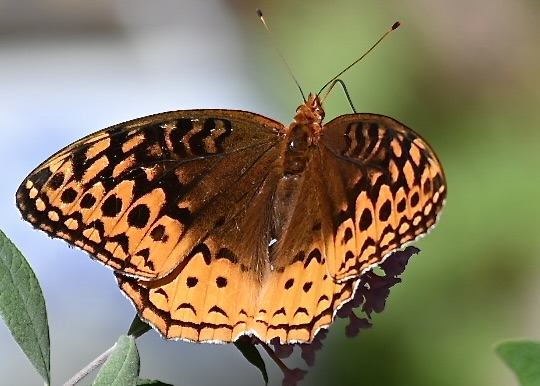
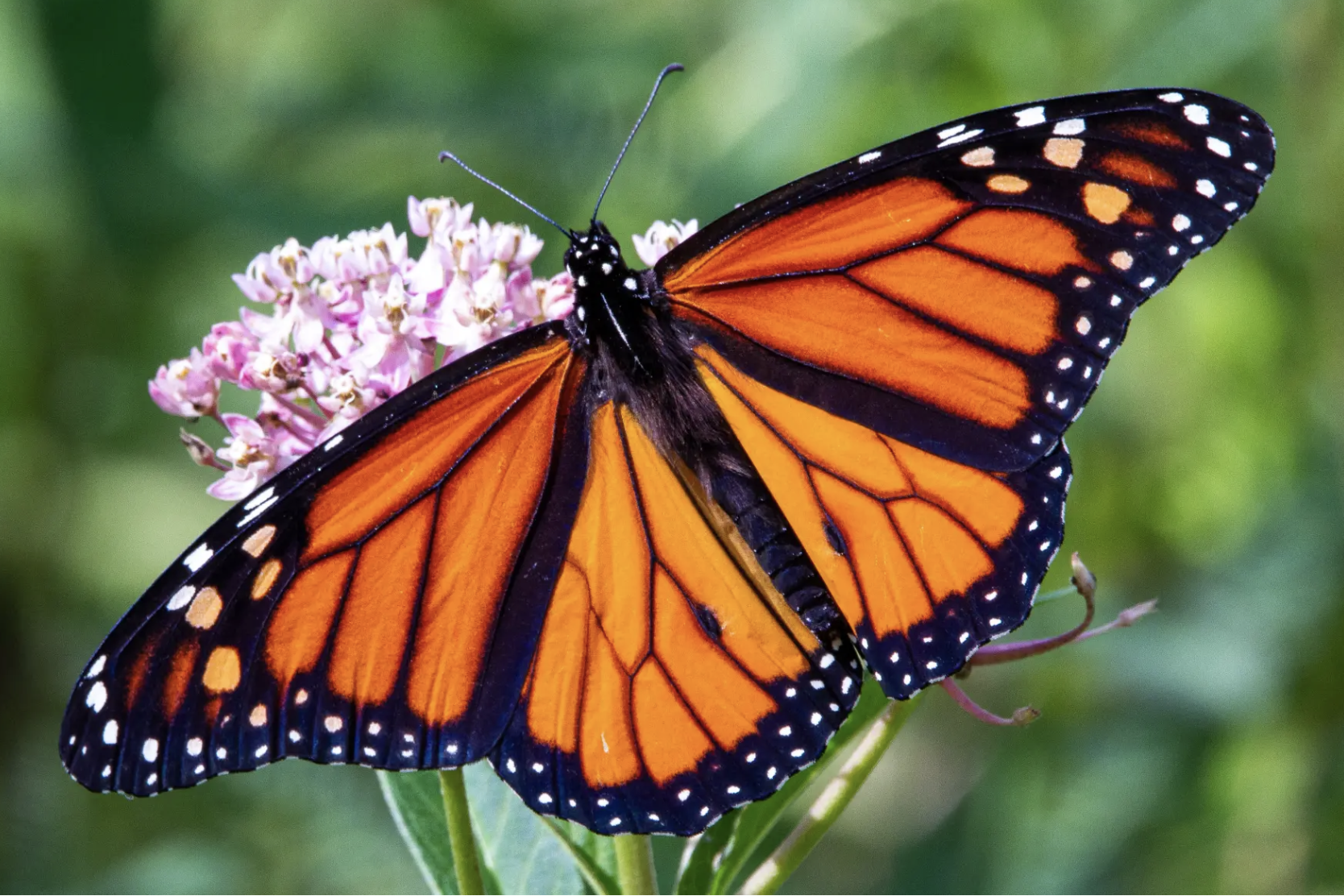
The Great Spangled Fritillary has been a frequent visitor these last few days to the butterfly bush growing beside the cabin, and they should be joined within days by the migrating Monarchs who’ll be making their annual trek through the North Carolina mountains, a journey that peaks for us in September or early October.
I’ll be the first to admit that I’m no lepidopterist, which should be obvious since I carelessly misclassified the two Great Spangled Fritillary in the photo below.
Great Spangled FritillaryGreat Spangled FritillaryMonarch (Google Photo)
The Fritillary are year round dwellers in the North Carolina mountains, unlike the migrating Monarchs.
The Monarchs will be coming through in droves later in the month on a journey of as much as 3,000 miles from Canada, Pennsylvania, or New York State, en route to Mexico, Panama, or some other Central- or South-American country.
I took the photos of the Great Spangled Frilliaries around 3 p.m. on Sept. 5, 2026. The image of the Monarch is a screen-grab from Goole images.
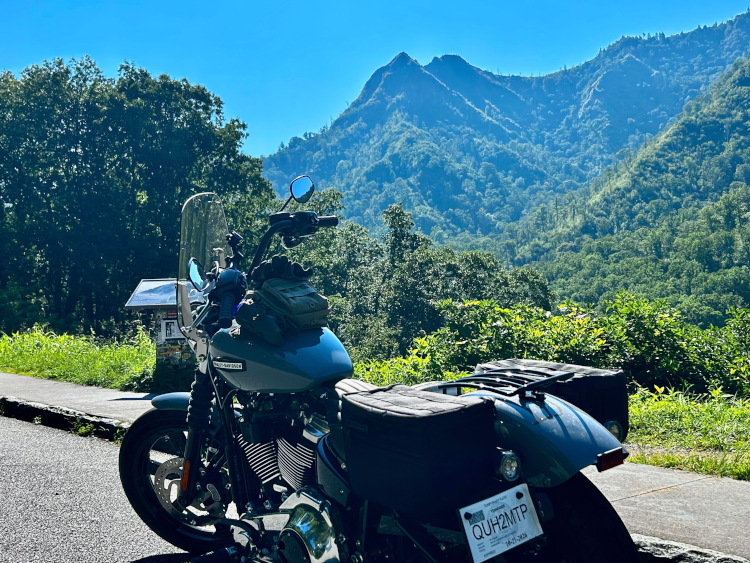
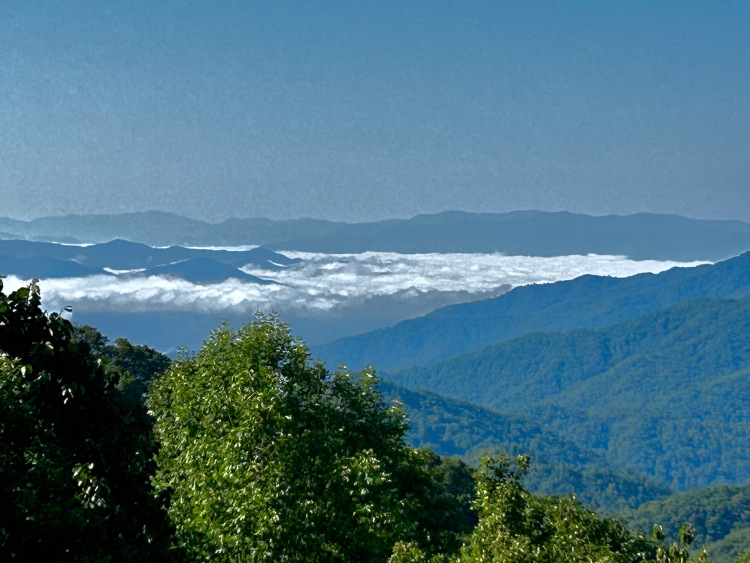
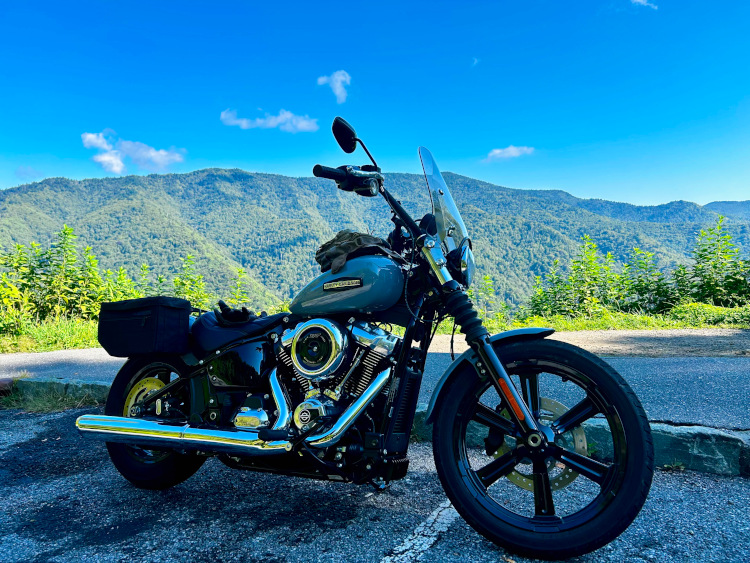
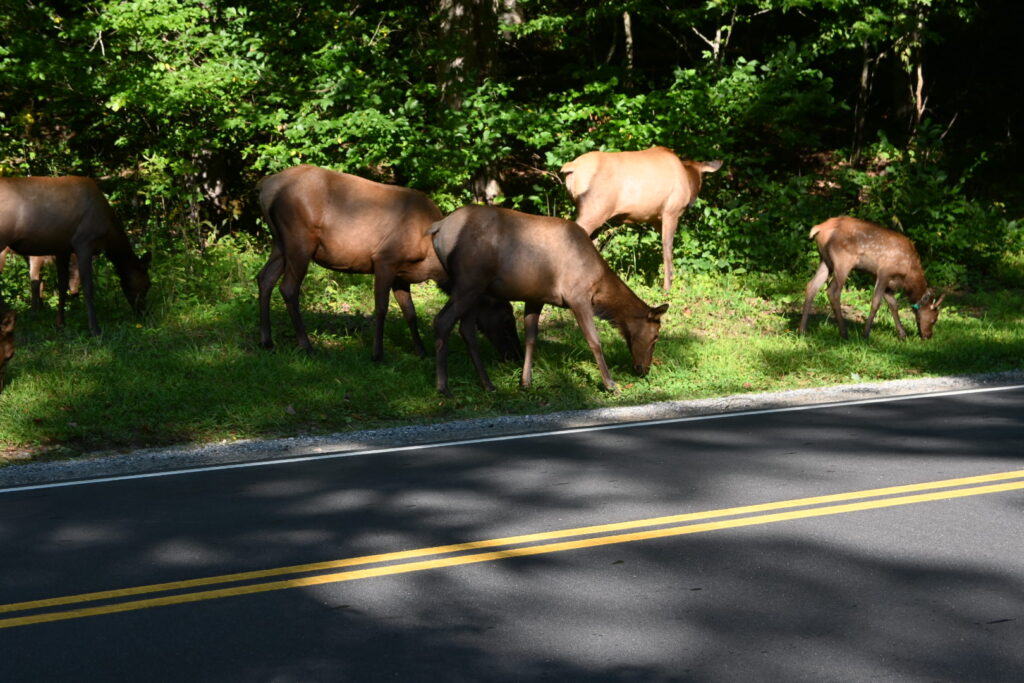
From my cabin to Cades Cove Loop in the Smoky Mountain National Park is a 270-mile round trip that takes you above the clouds, through lazy elk herds feeding on the roadside, and past more stunning views than a man can well comprehend in a single day-trip.
But if that’s what you’ve got, that’s what you make do with: A day trip, because Hazel, Phoebe and Poe would be waiting back home beside their dinner bowls.
SoI made it back to the cabin just before 1700 hours. The pups were disgusted with me but delighted to see that I survived yet another day.
I followed U.S. 74 East through Cherokee to U.S. 441 or Newfound Gap Road at the town of Cherokee. The highway runs through the Smoky Mountain National Park to Gatlinburg, but I turned west about two miles south of that tourist enclave and headed for the 11-mile one-lane drive known as Cades Cove Loop.
The loop takes you through flatter country, cleared and farmed by early settlers to the region. The area has several old homesteads, and at least three churches, an abundance of wildflowers, wetlands, pasturelands, and nice views of the landscape — but no elk, at least not on my day of touring.
At a visitor center, three women touring together from Georgia asked me to take their photo. I did. I passed one group of bikers and several lone riders, but it was mostly cars and the occasional recreational vehicle on this Tuesday. Traffic in the much-visited park is much lighter in September than in the summer months.
I went back home via Marysville and Tellico Plains, Tennessee, which made a nice loop itself.
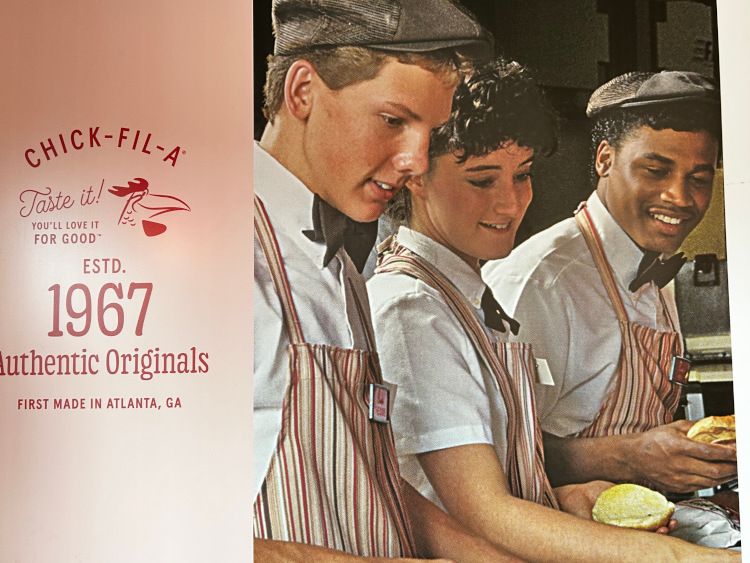
I sat down inside a Chick-fil-A for a meal of chicken strips, where a photo on the wall caught my eye. It celebrated the eatery’s founding in Atlanta, Georgia, in 1967, and shoed three smiling young cafe workers — two white and one black.
Nope, I thought. Not in 1967, Not in Atlanta, Georgia, would there be a young black man working alongside two young whites — not likely in the year of the Dixie Hill Riots, the year visiting jazz musician Les McCann sparked riots and mass protests when he was denied entry to the downtown YMCA even though he was a member. He just wasn’t the right color for Atlanta and the South in that year of racial turmoil — the year of school integration protests; the year Julian Bond, with the help of federal courts, finally gained a seat in the state’s General Assembly to which he’d been elected two years earlier.
Ah, well, I thought, what’s a little whitewashed history when the chicken is over-fried and over salty, the soft drinks are syrupey, and the skies outside are as blue as the dreams of the young, and the sun is shinning to beat the band.
Harriet Tubman was born into slavery here outside Cambridge, Maryland, in Dorchester County, and no one could have predicted at her birth in 1822 that she would become its most famous and most celebrated citizen.
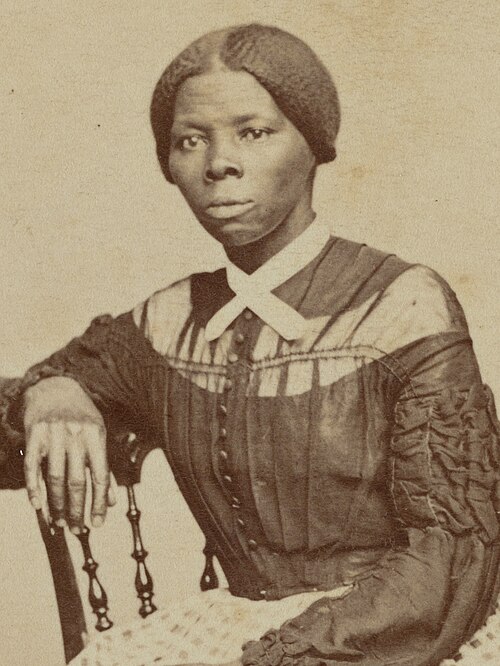
Harriet Tubman from a photograph taken in the 1860s or early 70s.
Tubman was a freedom fighter like no other. Though “barely five feet tall,” she became a giant.
In 2024, the Maryland National Guard posthumously promoted her to brigadier general for her work as an armed scout and spy during the Civil War,. She especially was noted for her heroism leading the Union raids on the Combahee River Ferry in Beaufort County, South Carolina, where some 700 plantation slaves were freed.
But Tubman was even bigger than that.
She had already become known for her escape from slavery and her night-time forays back into slave states to rescue and escort slaves to freedom.
In 2019, the National Museum of African American History and Culture and the Library of Congress jointly acquired the photograph above that was compiled by a Quaker school teacher who taught at Camp Todd, the Freedman’s School in Arlington, Virginia.
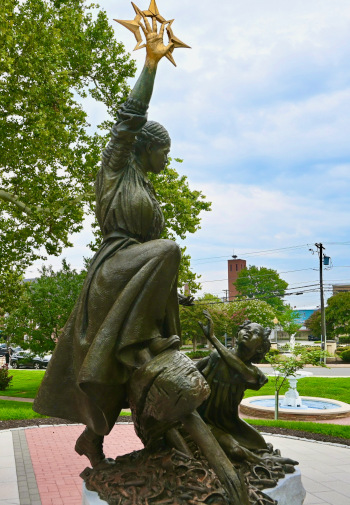
Harriet Tubman statue in downtown Cambridge, Maryland
The album was originally compiled as a gift for Tubman and contained 49 images taken during the 1860s.
“This photo album allows us to see Harriet Tubman in a riveting, new way; other iconic portraits present her as either stern or frail,” said Lonnie G. Bunch III, the founding director of the museum. “This new photograph shows her relaxed and very stylish. Sitting with her arm casually draped across the back of a parlor chair, she’s wearing an elegant bodice and a full skirt with a fitted waist. Her posture and facial expression remind us that historical figures are far more complex than we realize. This adds significantly to what we know about this fierce abolitionist—it helps to humanize such an iconic figure.”
Walking the streets of Cambridge today, where murals of Tubman and the Underground Railroad she helped establish adorn building walls, and shops sell Tubman goods and memorabilia, it’s fitting to be a bit awed by all she accomplished.
If everyone always lies to you, Hannah Arendt once wrote, the consequence is not that you believe the lies, “but that no one believes anything at all anymore—and rightly so, because lies, by their very nature, have to be changed, to be ‘re-lied,’ so to speak” — the liar constantly rewriting his own history.
Arendt was concerned with government lies, which require officials too to constantly rewrite history. Under a system of government lies, she believed, people are deprived of their capacity to act, their capacity to think and to judge. “With such a people you can then do what you please,” Arendt wrote.
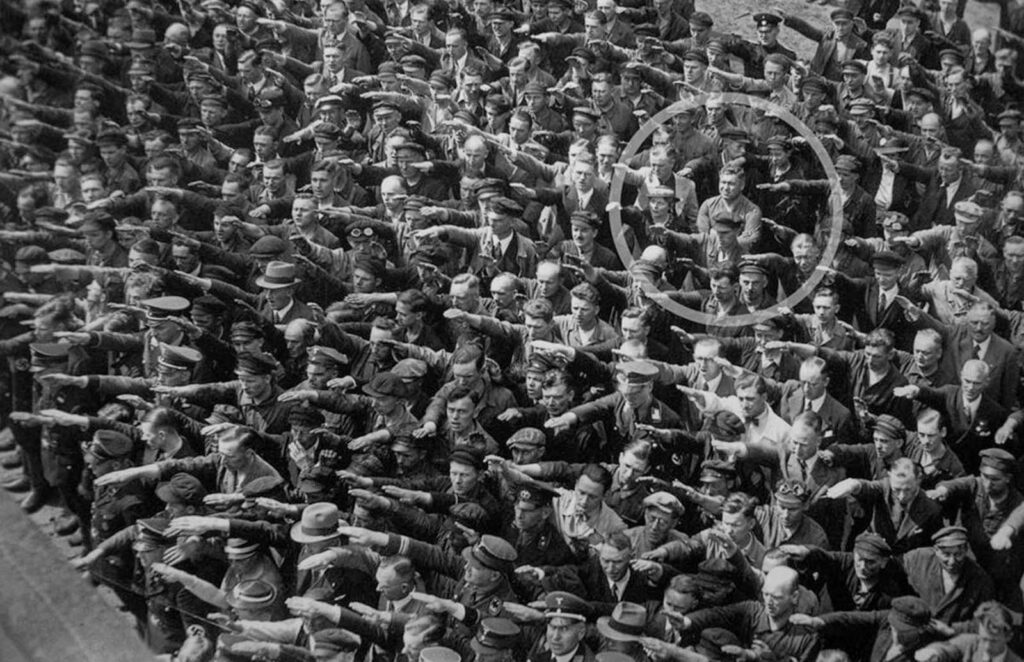
In this 1936 photograph from Hamburg, Germany, a man believed to be August Landmesser refuses to take part in the Nazi salute while a crowd cheers and salutes Adolph Hitler at a naval shipyard.
But a lying government often has little more to do to keep the populace in line. The people themselves begin to lie as part of their everyday lives. They mirror their government and their government mirrors them.
We are all George Santos. We pad our resumes. We spend our working years sitting behind a desk, shuffling papers, and when we grow old we feel the absence of adventure. We make do with tall tales.
And the only harm in inventing stories to make our lives more interesting are the lies themselves. The lies become our lives.
There are few August Landmessers among us. We are sheep.
Loneliness, Arendt counseled, is a better choice than associating with a dishonest person, a liar; those who keep company with liars will soon be liars themselves.
It’s hard to know how many of us citizens are monitoring the mess oozing from the ground in Ohio, where toxic waste water from fracking is bubbling out of the soil in dozens of places and is all but certain to show up one day in the drinking water of historic Marietta, Ohio, and other communities.
The radioactive mess should surprise no one. Ohio state officials have in the past few years approved more than 240 “injection wells” for the disposal of the waste oil and gas that are byproducts of fracking to mine the earth for natural gas.
By comparison, there are just 19 such injection wells in Pennsylvania, and a few dozen in West Virginia, both of which border Ohio.
State officials, like officials everywhere else, assured citizens the injection wells would safely entomb the water for ever.
That was, of course, a lie.
Beyond the toxic leaks oozing in yards, state forest, and farm fields are hundreds of millions of gallons of radioactive fracking wastewater buried with the state’s blessings beneath the feet of Ohioans.
COLUMBUS, OH — FEBRUARY 26: Protesters from Save Ohio Parks during the Ohio Oil and Gas Land Management Commission meeting to pick the winning bids for drilling under a state park and two wildlife areas, February 26, 2024, at the Ohio Dept. of Public Safety, Charles D. Shipley Building Atrium in Columbus, Ohio.
For years, it has arrived in a caravan of tanker trucks that come night and day to deposit the toxic brine in injection wells that pump it thousands of feet underground, where it is supposed to stay forever.
Except, oops. The poison brine is spurting to the surface, and locals fear it could soon contaminate the drinking water source for 32,000 people. “It would destroy the city,” said Susan Vessels, president of the Marietta City Council. “Once the damage is done, it cannot be undone.”
Vessels claims — though I’m absolutely not convinced — that residents and local officials were for years “completely unaware” of their place at the heart of an interstate marketplace for toxic waste. They’ve come to realize, she said, that their corner of Ohio has become a major destination for fracking brine.
What Vessels should have said is that she and others around Marietta were willingly blind to the destruction of Mother Earth. The photo of protestors at an Ohio fracking meeting comes from a February 2024 article, and there are news reports earlier than that.
This ecological nightmare didn’t come out of no where. It came with the approval of state and the silence of far too man local officials and citizens.
The domesticated tomato may date back 7,000 or more years, but the 2026 edible variety didn’t show up in Murphy, North Carolina, until July 23 at our local farmers market. At least this was the first I had seen this season.
So, naturally I’ve been eating a summer’s worth of tomato sandwiches since. And every one has been worth its weight in gold.
For those who want to know, the wild ancestor of the tomato, the red-fruited Solanum pimpinellifolium, is native to Chile, Peru, and Ecuador. The exact date of domestication is unknown, but as I said earlier, about 5,000 years before the Modern Era — some 7,000 years ago.
But it’s darn odd to me that the tomato is that old and yet mankind endured another 6,900 years or so before the first mention of the tomato sandwich. That didn’t happen until 1911 when The Virginia Chronicle newspaper published the first reference to a workingman’s tomato sandwich — which the idiot paired with watermelon, according to the newspaper anyway.
Watermelon with tomato! The indignity!
The tomato itself goes with lots of things, it’s true, but I doubt any southerner has wanted to pair it with melon. Go figure.
Anyhow, for a sandwich, the only absolute requirements are good bread, Duke’s Mayonnaise, and bacon. Lettuce may not be essential, but it’s a wonderful addition to the tomato sandwich. But with the current scare over the nasty stomach ailment known as cyclosporiasis I’ve been avoiding that leafy green addition for the time being.
So salute the wonderful tomato — not the supermarket variety, which you can buy year round though rarely if ever enjoyably. Supermarket tomatoes are legendary in their tastelessness.
Murphy, my adopted hometown, is doing its best to plug the gaps in tomato appreciation and history. This coming Saturday, August. 1, the Cherokee Clay Food Alliance in conjunction with the Murphy Farmers Market bring us the 3rd annual Tomato Fest on the farm market grounds at the old train depot.
And it’s peak season for the truly edible variety. I plan to make the festival to restock my tomato supply. I hope you can.
Valerie Turner lays lead guitar, handles lead vocals, and specializes in intricate Piedmont-style ragtime fingerpicking, while her husband and bandmate Benedict (Ben) Turner provides traditional roots percussion using the washboard, bones, harmonica, and harmony vocals. The two serve as cultural historians and educators preserving early African-American country blues.
Christian nationalists, meanwhile, are storming our shores with everything from Bible readings in public schools as policy, to the Ten Commandments wherever they can plant them, to “In God we Trust” branded onto everything but new babys’ bottoms. That has me wondering, Is the sharia-law scare a red herring?
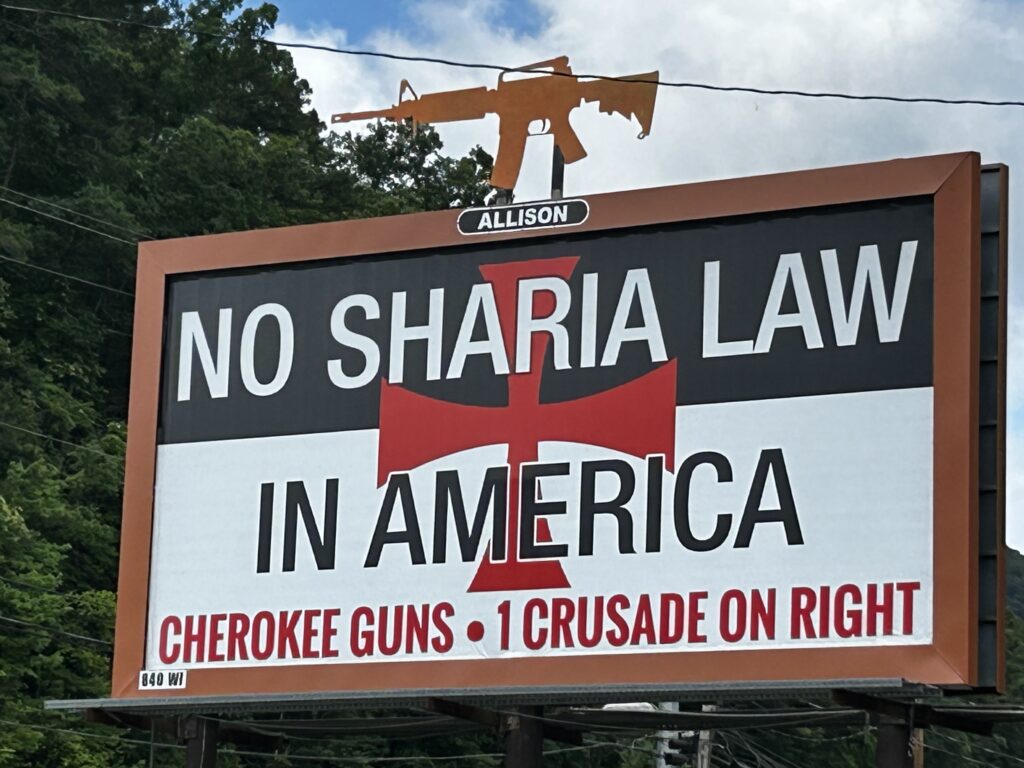
Most of us who live in the area recognize that the popular local store known as Cherokee Guns is fond of using its advertising as the sort of in-your-face provocations that are more or less “red meat” for the MAGA base that seems to be the store’s target audience.
See the above photo for a typical example. But give the Devil his due: no right thinking person wants to see religion setting the government’s agenda.
So “right on” Cherokee Guns — except don’t stop with sharia law. Keep a careful eye on the wayward Christians as well.
Because, as a quick glance at the news will tell you, there are few worse bad ideas in this current crazy and upside-down world of ours than the increasingly wanky and far-reaching attempts to force religion into our public lives, and by doing so compel us — heathen and heaven-bound alike — to take part in the worship of today’s god of choice.
In Murphy, North Carolina, after all, “In God we Trust” is chiseled in stone on our public buildings.
And here in the Bible Belt god isn’t Allah or any other holy or supernatural entity, however generous you may wish to be with your theology. Here God is Jesus. No other deity need apply.
With every passing day there are fewer and fewer of us left who can remember the days of yore — the pre 1950s — when pushing a religion onto others in public spaces was both a violation of recognized federal law as well as being arrogant and disrespectful of cultural traditions. It was thus taboo for government at every level of our society.
The concept of a “wall of separation between Church and State” was famously championed by Thomas Jefferson in his 1802 letter to the Danbury Baptists. In that letter, Jefferson stressed the need to keep civil governance and religious practice in distinctly separate spheres.
And James Madison, the “Father of the Constitution,” drafted the First Amendment, which prohibits Congress from establishing a national religion and protects the free exercise of religion or the exercise of no religion for all citizens.
But ever since then a loud and aggrieved minority of Christian Nationalists and their equally loud and equally aggrieved sympathizers have been working overtime to undo those prohibitions or water them down — to make it seem acceptable to us to mingle religion and government — to have, in fact, a government sanctioned religion.
Too often, it’s clear, prohibitions against evangelization and proselytizing by government seem to be in increasing danger of becoming a thing of the past.
Let’s also be clear — though Cherokee Guns may have brushed past this fact — there is too often no discernible difference between Christian and sharia legality: Consider, as an example, the New Testament commandment in Luke, Chapter 19, Verse 27, where Jesus issues the order via parable, “Those enemies of mine who did not want me to be king over them — bring them here and kill them in front of me.”
Do we really want our government championing that sort of criminal brutality? Right-thinking, decent people would overwhelmingly not only say ‘no’, but ‘hell no’.
The beginning of erosion of the separation of church and state is usually traced to the Cold War when the “Red Scare” frightened our shallow public officials into adding (in 1954) “under God” to the Pledge of Allegiance and adopt (in 1956) the slogan “In God We Trust” as the national motto.
And equally shallow and misguided politicians such as Donald J. Trump are still at it.
As recently as a few days ago, when addressing a crowd at the Faith & Freedom Coalition’s annual Road to Majority conference at the Washington Hilton hotel, Trump insisted that the “(radical left) want to resume the transgender mutilation of children, they want to restart the war on Christians and churches, and as you saw with the communists elected in New York recently … they want to completely destroy the traditional American way of life.”
He described recent election winners in New York — none of whom were Republican, one can’t help but notice — as “very troubling people” and claimed without evidence (his lazy and recurring modus operandi) that they “want to destroy our country, and they hate our country and our people.”
So here we are, in 2026, well positioned to resurrect the dumbed-down days of the mid 1950s with its Red Scare and breathless fear of “communists” in every nook and cranny of our beloved but besieged nation.
It would be well for us to pause at this point and recognize that the Ten Commandments, or any other part of the Bible, Koran or whatever so-called holy books we may want to hold up for evidence of ways to live our lives are unsound foundations for both law and everyday morality.
These old books, as countless scholars have long recognized, are nothing more than the product of bronze-age tribal values. They preach a cruel form of authoritarianism, insecurity, and outdated social values, including subjugation of women, and a love of slavery.
They are consequently incompatibility in a more modern era with true ethical, humanistic, and science-based reasoning that should be the goal of us all.
It’s not too late, but it may soon be unless we stand up to the misguided religious bullies who want to take away yet another of our freedoms — the freedom to choose our own religion or to choose no religion at all.
The misguided want to return us to the days of King Charles I of early 1600 England when the state-sanctioned religion was the “high church” Anglican ceremonies and no others. Backed by the Archbishop of Canterbury, Charles I prohibited preaching outside the Anglican tradition and punished those who wouldn’t fall in line.
Disgruntled Brits fled across the ocean to a new world. Soon they were calling it the United States, and putting in place laws and customs that called for a strict separation of church and state that became part of the new nation’s founding charters.