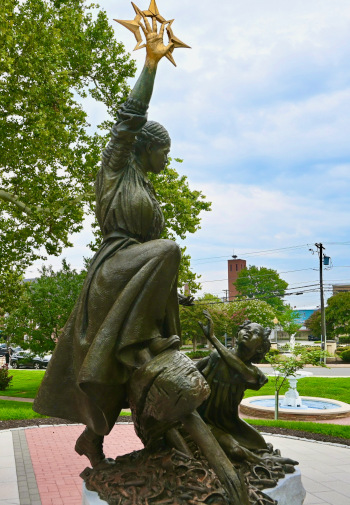
Harriet Tubman was born into slavery here outside Cambridge, Maryland, in Dorchester County, and no one could have predicted at her birth in 1822 that she would become its most famous and most celebrated citizen.
Tubman was a freedom fighter like no other. Though “barely five feet tall,” she became a giant.
In 2024, the Maryland National Guard posthumously promoted her to brigadier general for her work as an armed scout and spy during the Civil War,. She especially was noted for her heroism leading the Union raids on the Combahee River Ferry in Beaufort County, South Carolina, where some 700 plantation slaves were freed.
But Tubman was even bigger than that.
She had already become known for her escape from slavery and her night-time forays back into slave states to rescue and escort slaves to freedom.
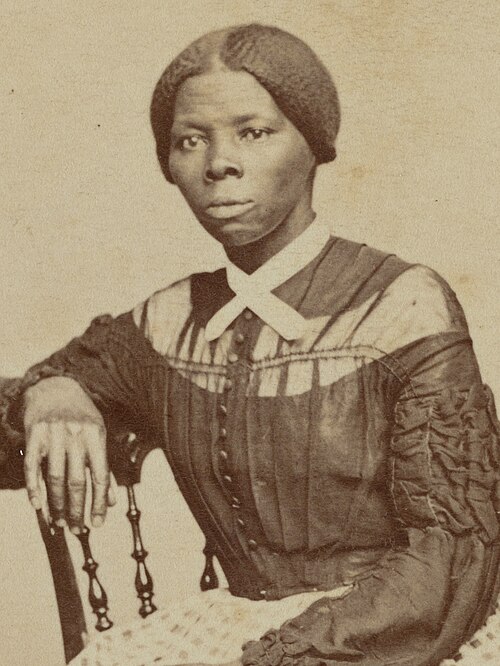
In 2019, the National Museum of African American History and Culture and the Library of Congress jointly acquired the photograph above that was compiled by a Quaker school teacher who taught at Camp Todd, the Freedman’s School in Arlington, Virginia.
The album was originally compiled as a gift for Tubman and contained 49 images taken during the 1860s.
“This photo album allows us to see Harriet Tubman in a riveting, new way; other iconic portraits present her as either stern or frail,” said Lonnie G. Bunch III, the founding director of the museum. “This new photograph shows her relaxed and very stylish. Sitting with her arm casually draped across the back of a parlor chair, she’s wearing an elegant bodice and a full skirt with a fitted waist. Her posture and facial expression remind us that historical figures are far more complex than we realize. This adds significantly to what we know about this fierce abolitionist—it helps to humanize such an iconic figure.”
Walking the streets of Cambridge today, where murals of Tubman and the Underground Railroad she helped establish adorn building walls, and shops sell Tubman goods and memorabilia, it’s fitting to be a bit awed by all she accomplished.