Migratory birds begin arriving for seasonal stay in the mountains

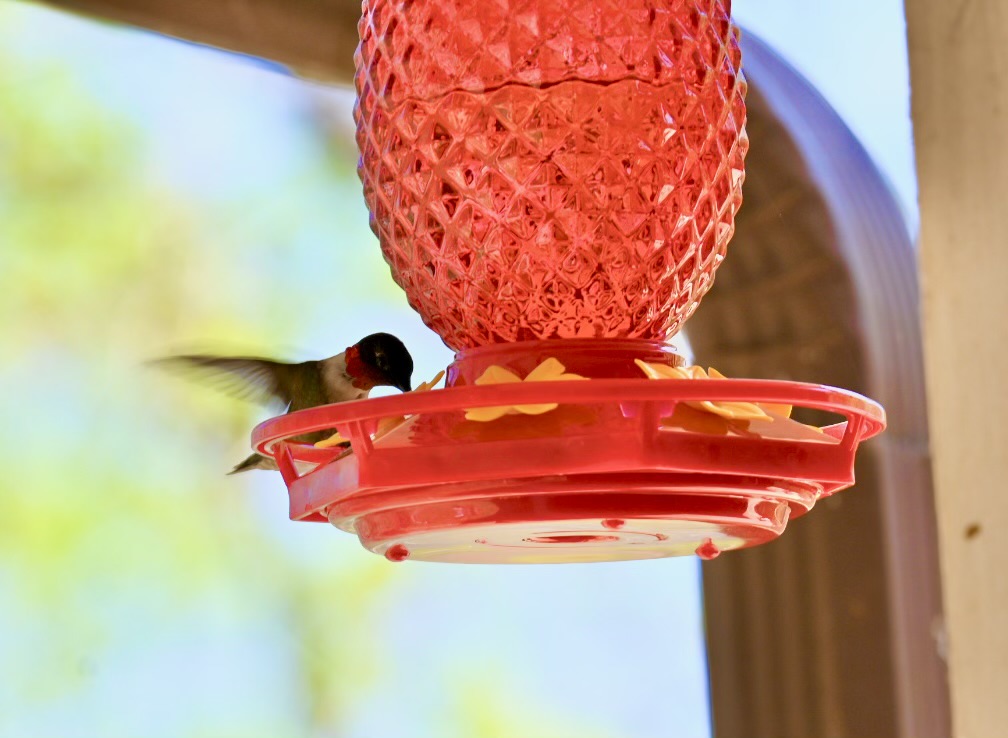
A hummingbird visits a feeder on my deck.

The first hummingbird of spring visited my deck on Thursday, two days ago, and today, Saturday, April 11, I finally got a photo of one.

The visitor I got a blurry photo of traveled to Cherokee County, North Carolina, from Central America. Like most of his fellow travelers, he is a ruby-throated hummingbird — the primary species we have in this part of the country.

According to researchers at North Carolina State, millions of hummingbirds make the trip back and forth from North Carolina to Central America.

The males arrive first, some as early as late March and others in early- to mid-April. The females are not far behind. The small birds are like many of our part-time residents — here for the season, where they will nest, mate and breed.

But before the weather turns too cold in the fall, they’ll head south again, many of them traveling across the Gulf of Mexico to warmer climates in Southern Mexico, Belize, or Guatemala. Some travel as far south as Panama.

By mid-October, most if not all of the tiny, colorful critters will be gone to spend the winter in the warmer south. While many travel overland through Texas and Mexico, others map a more direct route, flying straight across the Gulf of Mexico and into Central America.

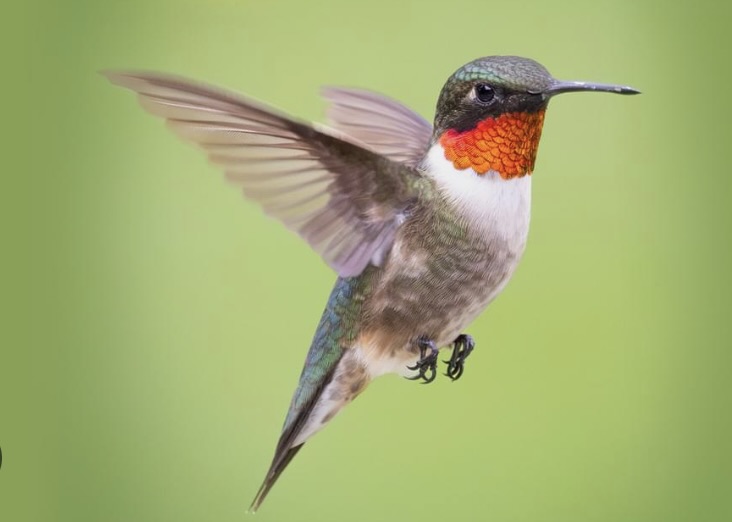
Photo from the Cornell Lab of Ornithology. The small birds can beat their wings as many as 60 times per second, an astonishing feat that demands lots of oxygen.

To beef-up for the 1,500- to 2,000-mile trip, hummingbirds will gain roughly from 25 percent to 50 percent of their regular weight — and occasionally up to 100 percent — from 3 grams to 6 grams.

Even so, estimates are that nearly half the migrating population may not survive the trip. And for some species, the trip is much longer than 2,000 miles. Rufous hummingbirds, for example, migrate from their winter habitats in Western Mexico and follow the Pacific flyway north into California and then on to Alaska where they nest and breed over the summer.

Those who survive make it to Alaska by May, and by July have had their families, and are heading south again to take advantage of late blooming alpine flowers.

Migration isn’t the only danger these tiny specialized nectarivores. Some species have lost half their numbers to pesticide use and other environmental degredations of the modern era. But they also are highly adaptable.

There are now more than 330 recognized hummingbird species, but UC Berkeley herpetologist Jimmy McGuire believes that number could double in the next several million years. “We are not close to being at the maximum number of hummingbird species,” McGuire says.

The Old Stovall Mill

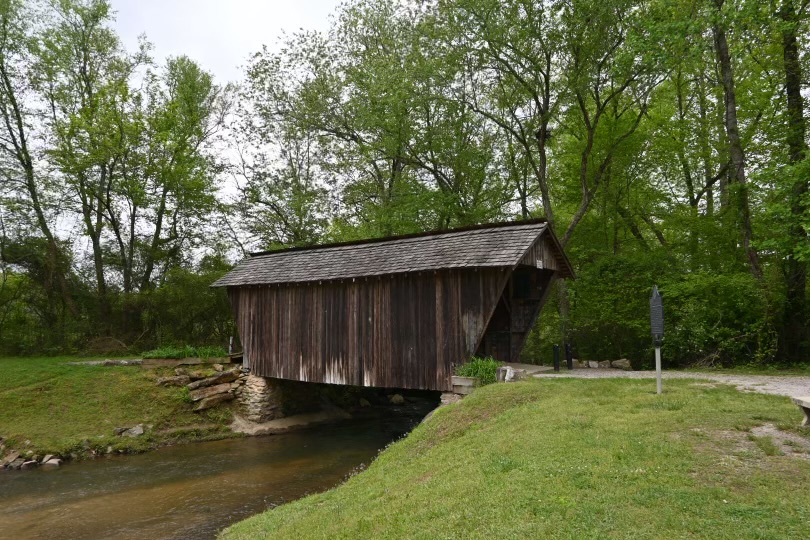
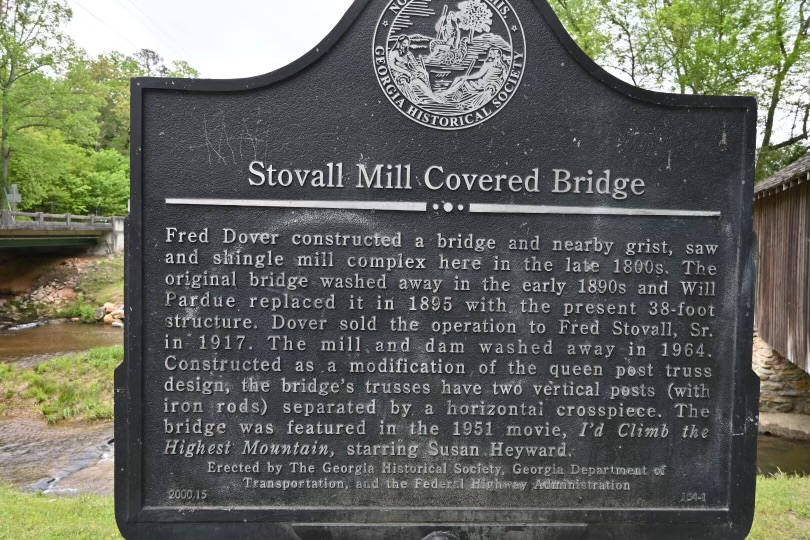
The old Stovall Mill Covered Bridge at Sautee Junction, Georgia. Click on any of the images for an expanded view.

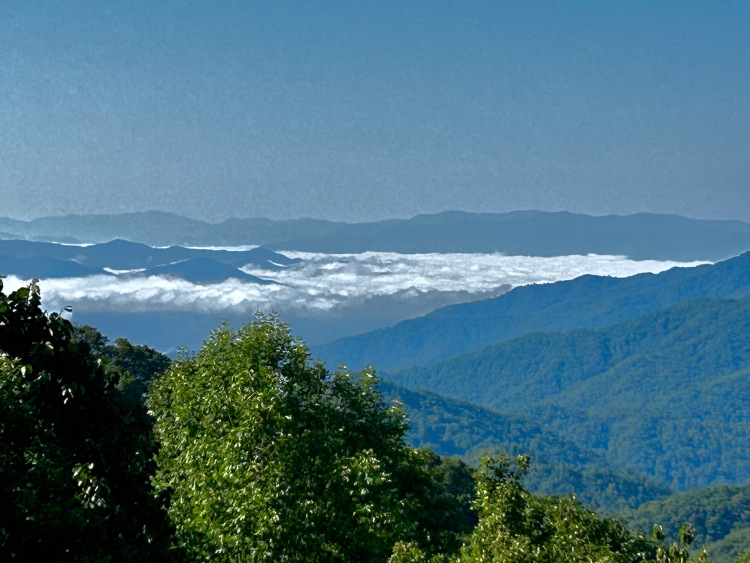
Fog wrapped the taller mountains in a soggy embrace along the Russell Scenic Highway as I made my way to the historic old covered bridge near Sautee Junction, roughly another 30 miles away.

This area of Georgia is part of the Russell-Brasstown Scenic Byway, which itself is part of our National Scenic Byways that dot this big country of ours. All told, there are 184 National Scenic Byways scattered throughout 48 states.

This one is in the beautiful Chattahoochee-Oconee National Forest. Brasstown Bald is somewhere off to my left.

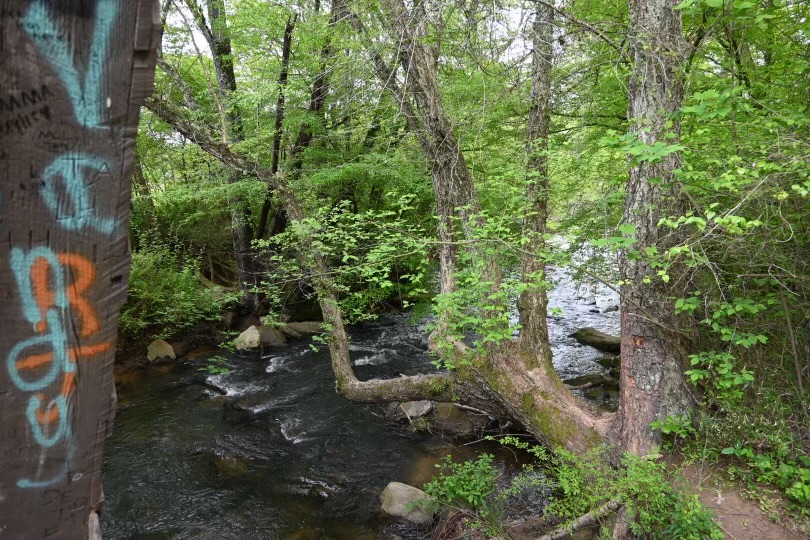
The bridge is a popular spot for graffiti and seems especially popular for young lovers who need to declare their affinity for each other in chalk. The river is scenic here as it is elsewhere.

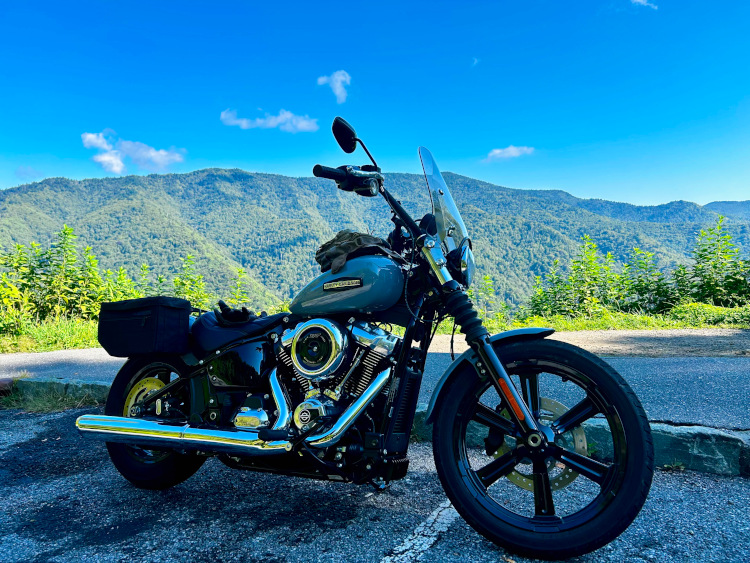
I have on a long-sleeve summer sun shirt, a T-shirt over that and then a leather vest — all topped off with a blue jean jacket. It’s border line enough clothing for motorcycling at these elevations and beneath this overcast, foggy sky.

But the sun returned as I reached the turn-off to Helen, Georgia, a tourist trap along the Chattahoochee River, which many people mistakenly believe is the river from the movie “Deliverance.” But, no, that’s the  Chattooga River.

And while on “Deliverance” trivia, the rundown town in the movie wasn’t actually in Georgia at all. Those scenes were filmed in Sylva, North Carolina. Same thing with the movie, “Three Billboards Outside Ebbing, Montana” — another cinematic wonder also filmed in Sylva.

Anyhow, the Stovall Covered Bridge isn’t much to look at.

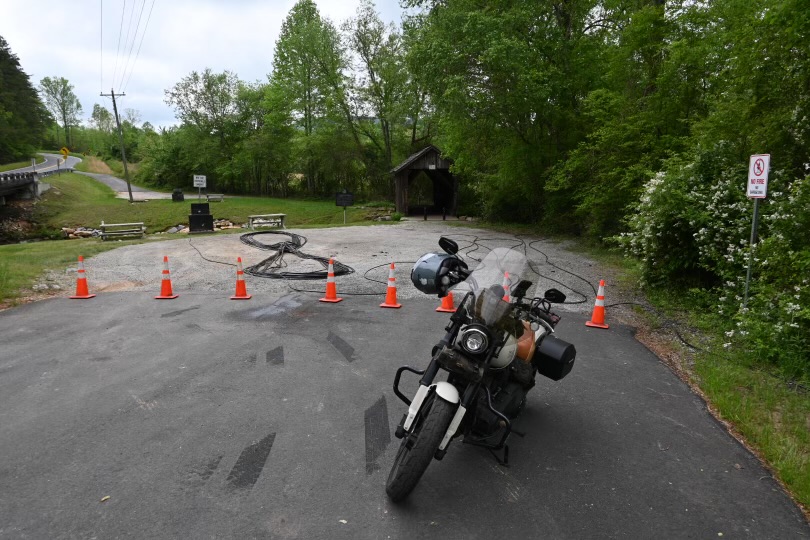
There are picnic tables at the bridge along the beautiful Chattahoochee though, and it’s a nice stop for a snack and a break from the saddle — especially for motorcycle riders, who need more butt-rests than auto travelers might.

I had bought a root beer and a chocolate bar at the Old Sautee Store a few miles back, so I sat at one of the tables, snacked, and enjoyed the view for awhile along with the mid 70-degree day. The chill of the higher mountains long gone.

On the day I visited the mill fiber optic cable was coiled on the ground ready for stringing by crews hoisting it to poles.

The Old Sautee Store and Market make for an interesting if not critical stop for sightseers. There was a father with his two-month-old baby sitting on the porch during my visit. The little boy, wide eyed and smooth skinned as wee ones his age are, worked his month like a guppie and waved his arms like a sea amoeba as I walked by him.

Which gets to my sole bit of advice for the day: Never trust anyone who can walk by a new-to-the-world child like that one was without smiling.

I’m unsure why we always smile at seeing the very young, perhaps as a small way of rejoicing at the world renewing itself, replacing us wrinkled and mostly worn out old versions with new ones.