"The hour of the American barbarian is at hand. Violence, excess, waste, mercantilism, bluff, conformism, stupidity, vulgarity, disorder." — Aimé Césaire
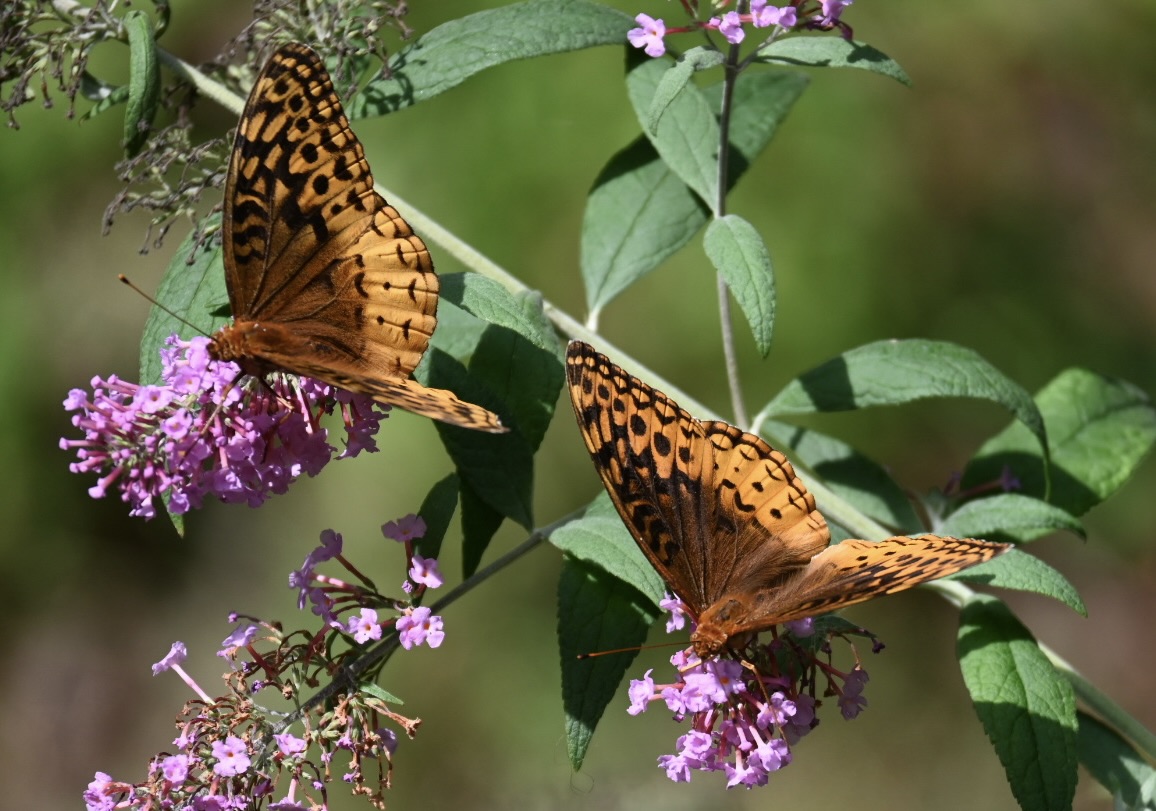
The Great Spangled Fritillary has been a frequent visitor these last few days to the butterfly bush growing beside the cabin, and they should be joined within days by the migrating Monarchs who’ll be making their annual trek through the North Carolina mountains, a journey that peaks for us in September or early October.
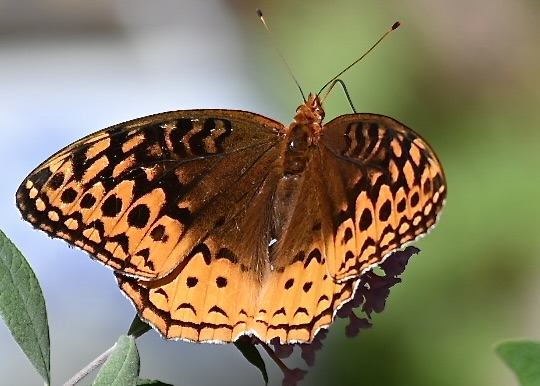
I’ll be the first to admit that I’m no lepidopterist, which should be obvious since I carelessly misclassified the two Great Spangled Fritillary in the photo below.
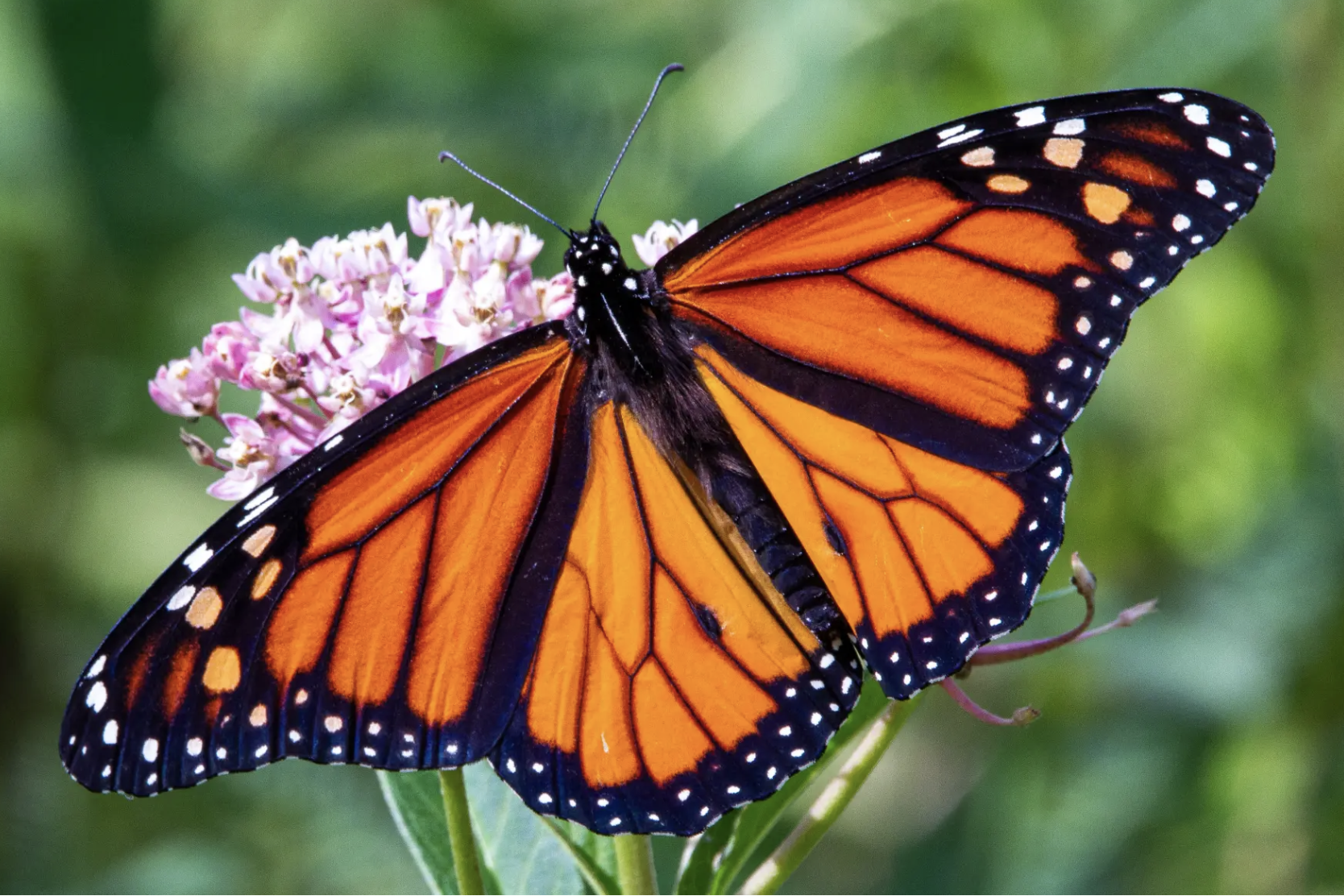
Great Spangled FritillaryGreat Spangled FritillaryMonarch (Google Photo)
The Fritillary are year round dwellers in the North Carolina mountains, unlike the migrating Monarchs.
The Monarchs will be coming through in droves later in the month on a journey of as much as 3,000 miles from Canada, Pennsylvania, or New York State, en route to Mexico, Panama, or some other Central- or South-American country.
I took the photos of the Great Spangled Frilliaries around 3 p.m. on Sept. 5, 2026. The image of the Monarch is a screen-grab from Goole images.
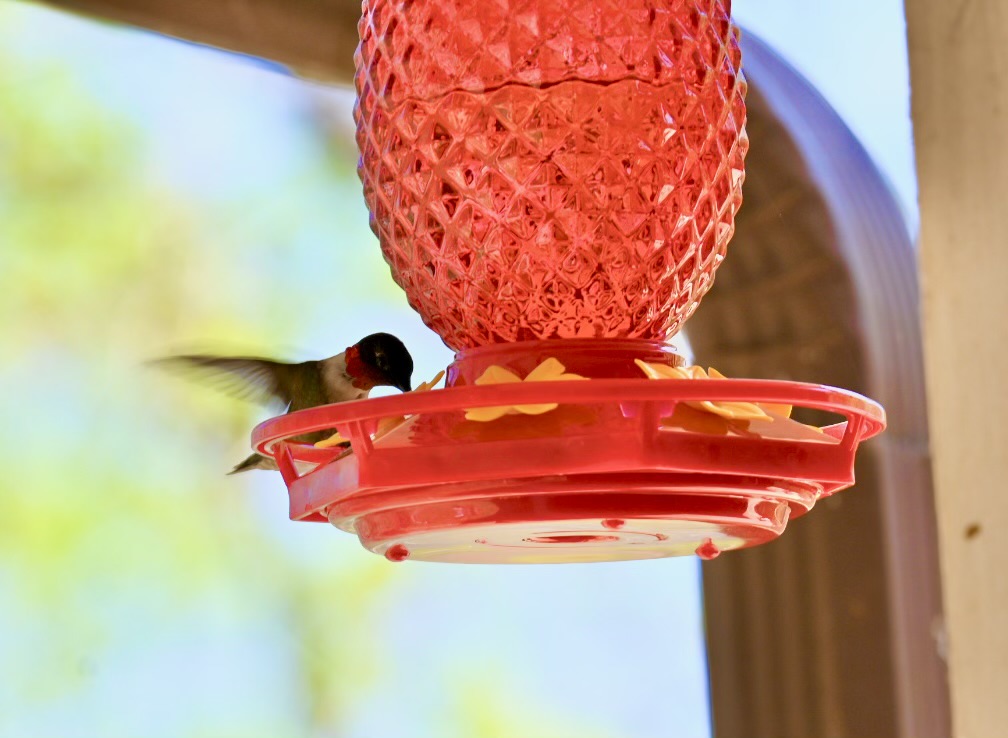
The first hummingbird of spring visited my deck on Thursday, two days ago, and today, Saturday, April 11, I finally got a photo of one.
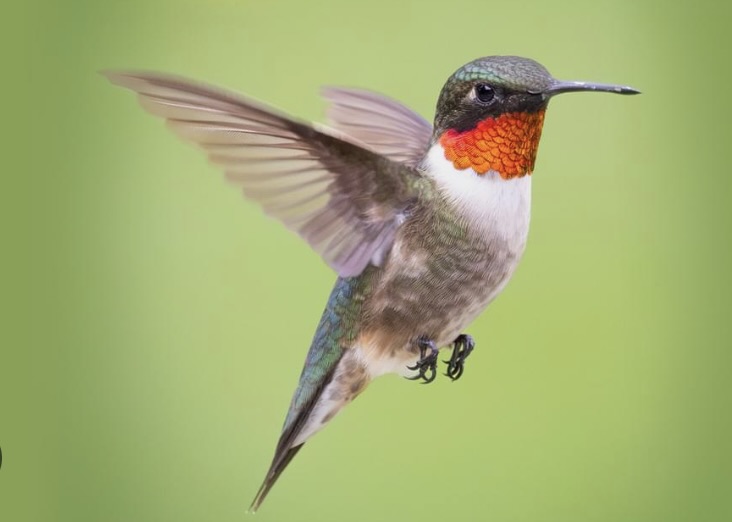
The visitor I got a blurry photo of traveled to Cherokee County, North Carolina, from Central America. Like most of his fellow travelers, he is a ruby-throated hummingbird — the primary species we have in this part of the country.
According to researchers at North Carolina State, millions of hummingbirds make the trip back and forth from North Carolina to Central America.
The males arrive first, some as early as late March and others in early- to mid-April. The females are not far behind. The small birds are like many of our part-time residents — here for the season, where they will nest, mate and breed.
But before the weather turns too cold in the fall, they’ll head south again, many of them traveling across the Gulf of Mexico to warmer climates in Southern Mexico, Belize, or Guatemala. Some travel as far south as Panama.
By mid-October, most if not all of the tiny, colorful critters will be gone to spend the winter in the warmer south. While many travel overland through Texas and Mexico, others map a more direct route, flying straight across the Gulf of Mexico and into Central America.
Photo from the Cornell Lab of Ornithology. The small birds can beat their wings as many as 60 times per second, an astonishing feat that demands lots of oxygen.
To beef-up for the 1,500- to 2,000-mile trip, hummingbirds will gain roughly from 25 percent to 50 percent of their regular weight — and occasionally up to 100 percent — from 3 grams to 6 grams.
Even so, estimates are that nearly half the migrating population may not survive the trip. And for some species, the trip is much longer than 2,000 miles. Rufous hummingbirds, for example, migrate from their winter habitats in Western Mexico and follow the Pacific flyway north into California and then on to Alaska where they nest and breed over the summer.
Those who survive make it to Alaska by May, and by July have had their families, and are heading south again to take advantage of late blooming alpine flowers.
Migration isn’t the only danger these tiny specialized nectarivores. Some species have lost half their numbers to pesticide use and other environmental degredations of the modern era. But they also are highly adaptable.
There are now more than 330 recognized hummingbird species, but UC Berkeley herpetologist Jimmy McGuire believes that number could double in the next several million years. “We are not close to being at the maximum number of hummingbird species,” McGuire says.
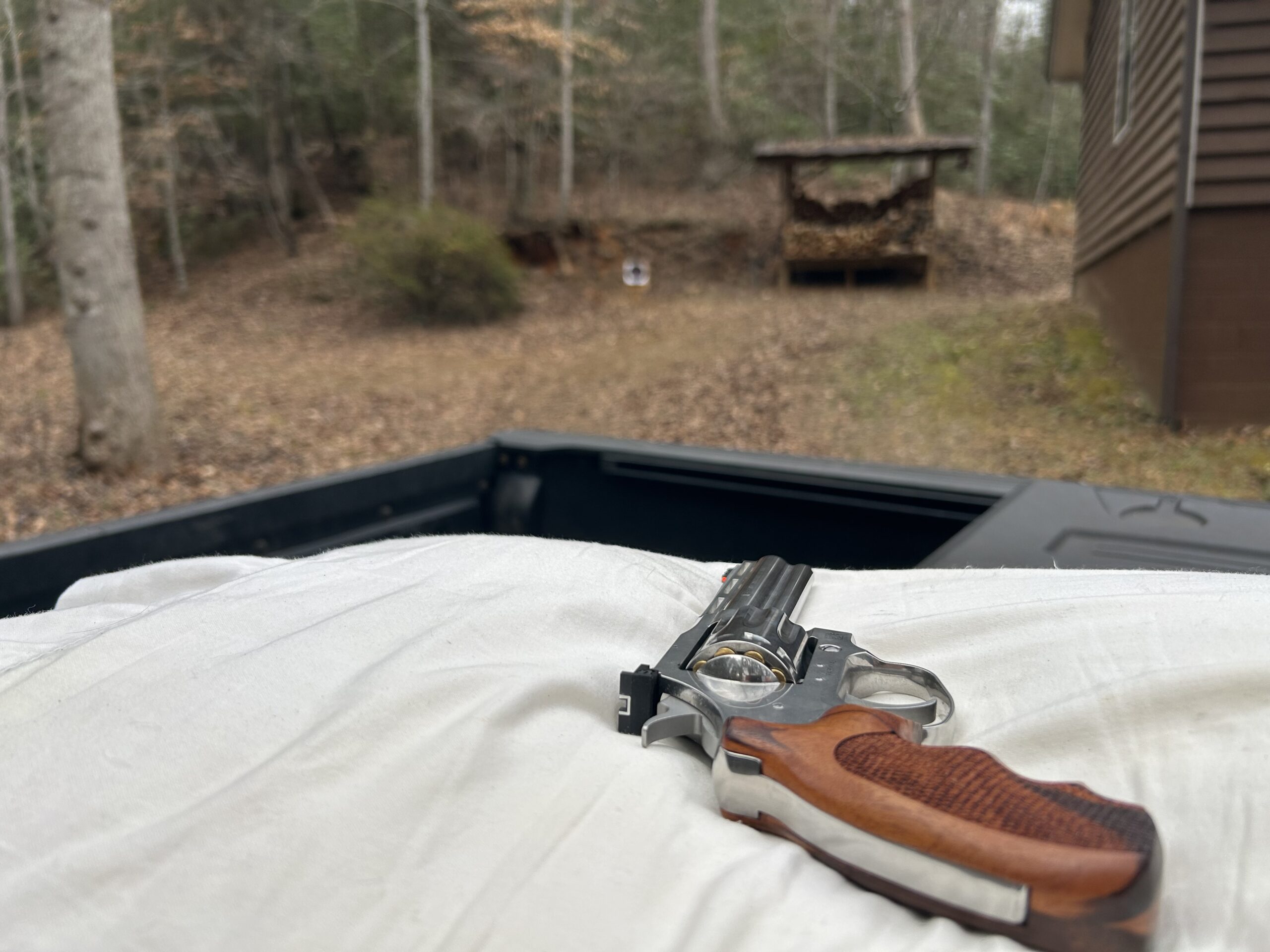
I’d already replaced the rear sights on my other Colt revolvers, and the other day I finally got around to the baby of the bunch — my .22 caliber King Cobra.
Look carefully at the photo of the pistol on a pillow in my truck bed and focus downrange. You’ll see a tiny target between the firewood shed and the azalea bush on the left. That’s what I was aiming for.
That cluster of shots you see in the close-up photo below is what I was left with after installing the new rear sight. I left the elevation at zero and didn’t adjust the windage from what it was at the install.
It looked about right to me when I eyeballed it. Turns out I wasn’t far off.
Not bad for a first run through.
The rear sights on Colt pistols as they come from the factory are — as everyone knows — pretty much garbage. Adjusting windage is a two-part process: you first have to loosen a “hold-tight” screw atop the sight and then turn another screw on its side to move the sight or point of impact right or left; then you have to re-tighten the first screw, the hold-tight screw.
As I said, it’s a messy process.
The tiny hold-tight screw is a flimsy thing that won’t remain locked down — even with the recommended use of lock-tight.
Shame on Colt. New, reliable sights run about $100 and are well worth the expense.
On the two replacement sights I have used — Kensight and Wilson Combat — there’s a single screw to adjust windage — as it should be, but isn’t, with the Colt factory sights.
Both Kensight and Wilson make fine products that are easy to install. Kensight, out of the Atlanta area, offers better shipping terms, so you save a few bucks over the Arkansas produced Wilson. But, as I say, both are excellent replacements for the Colt mess.
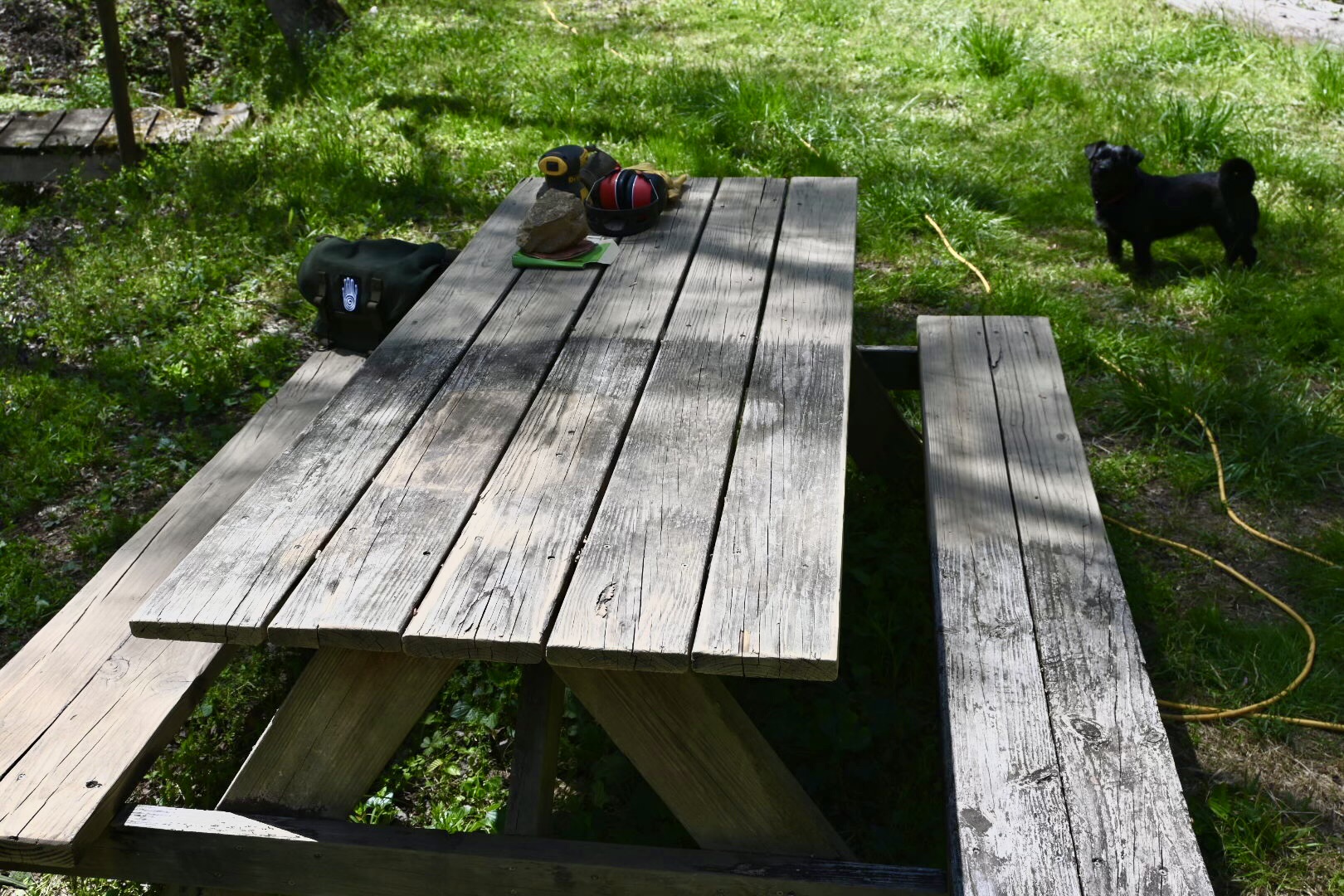
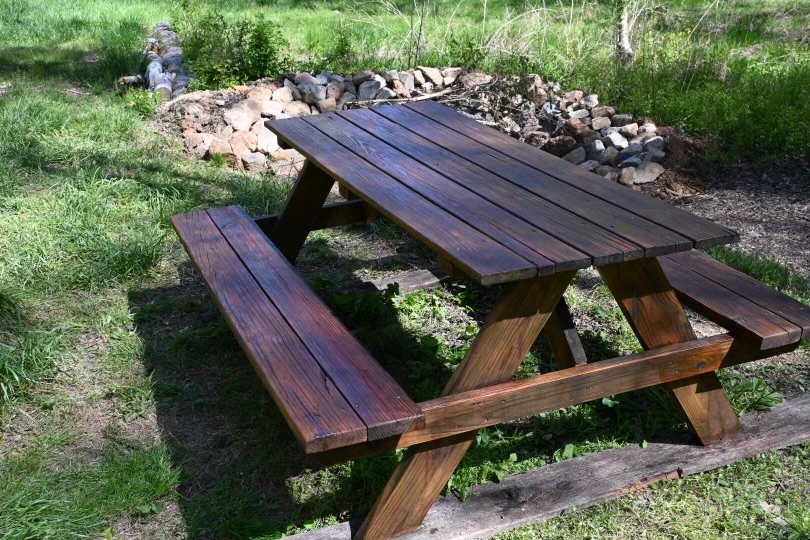
The picnic table was here when I moved in more than seven years back, and the summer and winters had taken their toll.
So, finally, after years of putting it off, I spent a day sanding at an old man’s pace while Hazel kept watch and looked on.
Rot had eaten its way up one of the legs, so that had to be replaced; otherwise the old table of treated wood while poor cosmetically was in surprisingly good condition.
I found a suitable piece of lumber for the new table leg in my wood pile that was the right dimensions. Two quick cuts with the circular saw was all it took and then I screwed it in place with decking screws.
A No. 40 disk on the sander cut through the grime and got the wood ready for a coat of Cabot seal and stainer. I opted for a stain with a cedar tint, thinking, correctly, I believe,
The table after the first coat of stain.
that the tinting might help cover some of the many imperfections in the table’s surface.
To help keep it in better repair than it has been these past few years I’m considering putting paving stones down for a small patio like surface alongside the fire pit. Time will tell whether I ever actually get around to that job. Maintenance and chores around the place, while in ready supply, no longer hold the charm for me that they seemed to in years past. But, as I say, time will tell how much more actually gets done.
I trust, though, that I’ll at least have the will to add a few more coats of sealer and stain, though prettier weather returns tomorrow that promises to be nearly perfect for a motorcycle trip; so I’m not making any promises/
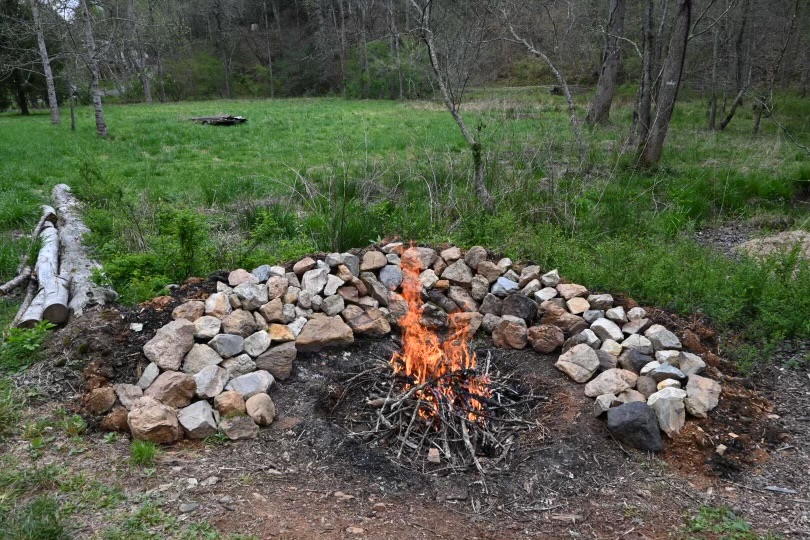
Hazel was a loyal companion during my efforts over two days to gather stones to line the fire pit, which made the job more enjoyable but the loads no lighter. Click image for a larger view.
It’s a start.
For the past couple of days I’ve been hauling rocks from wherever I could find them to my fire pit alongside the swamp. It’s a work in progress.
A rich source for the stones has been the stream that runs along part of my western boundary before spilling through a culvert that runs under my drive and then into Horny Hog Ridge Creek. I hauled out a dozen or more stones from the stream yesterday and added them to the growing circle. It’s slow work, but I’ll get there.
I keep telling myself there’s no rush, but getting a few stones in place has a way of projecting what the finished project might look like and then the rush to completion is on. It’s a battle to fight the urge to overdo it.
But, then again, maybe the photo is overdoing it. It is, after all, a work in progress: there are many more stones to go. As fortune would have it I live in the mountains.